
Diagnostic performance of an artificial intelligence-based electrocardiogram interpretation system for acute coronary occlusion in adults following out-of-hospital cardiac arrest
Overview
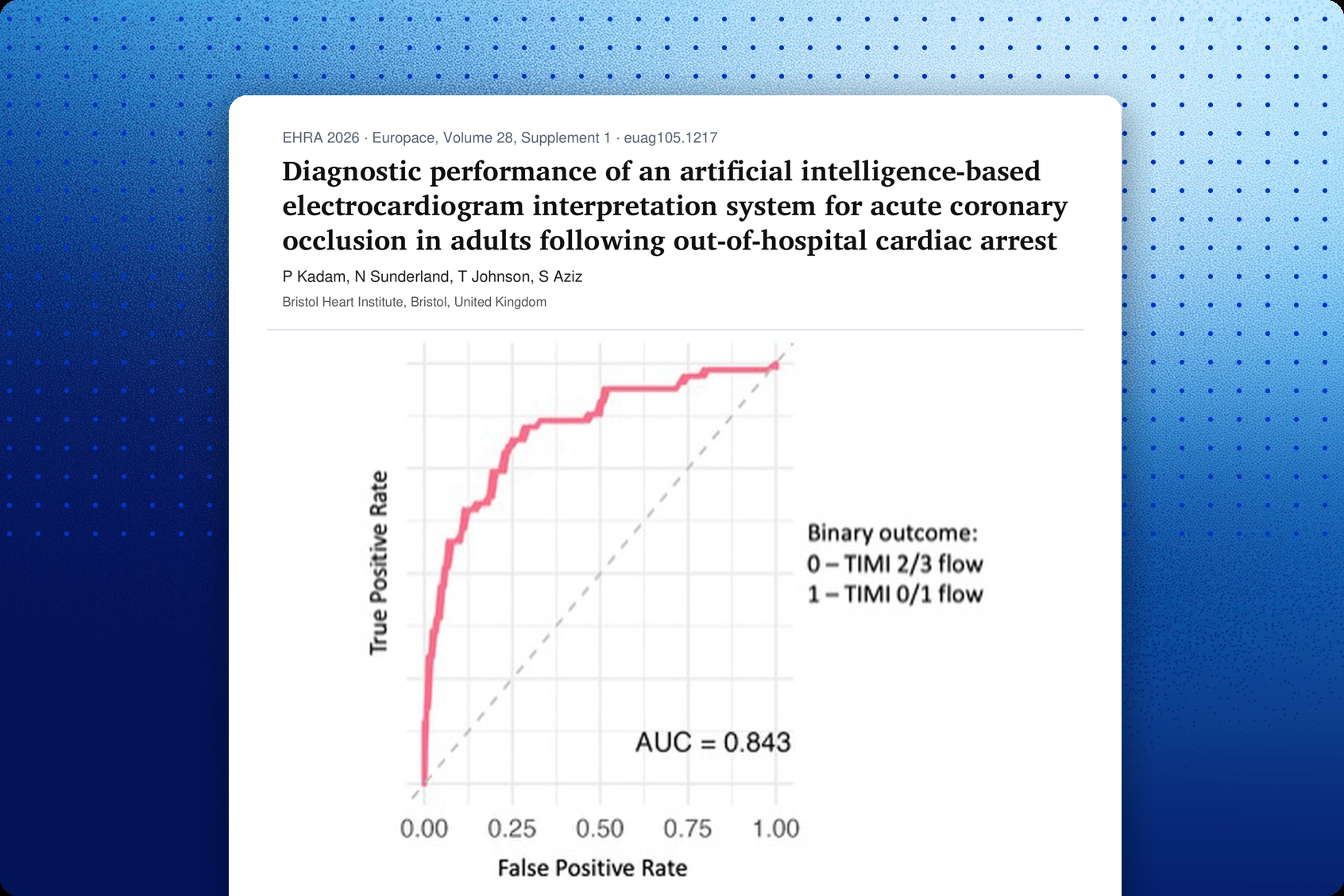
This independent, retrospective study from the Bristol Heart Institute in the UK compared an AI-based ECG interpretation system, PMcardio Queen of Hearts (aOMI v1), with experienced clinicians applying standard STEMI criteria for detecting acute coronary occlusion after out-of-hospital cardiac arrest. Of 154 patients with an analyzable post-arrest ECG and coronary angiography, 66 (42%) had an angiographically confirmed acute culprit vessel occlusion. The AI system reached an area under the curve (AUC) of 0.843, with 82% sensitivity and 75% specificity, comparable to clinicians using STEMI criteria (76% sensitivity, 81% specificity). Of the 16 occlusions that showed no ST elevation on the ECG, the AI system identified 11.
Key findings
- Among 154 adults after out-of-hospital cardiac arrest with an analyzable post-arrest ECG and coronary angiography, 66 (42%) had an acute culprit vessel occlusion (TIMI 0–1 flow).
- The AI-based ECG system detected acute coronary occlusion with an AUC of 0.843.
- At a decision threshold of 0.48, the AI system reached 82% sensitivity and 75% specificity, compared with 76% and 81% for clinicians applying STEMI criteria.
- Of the 16 occlusions (24%) without ST elevation on the ECG, the AI system identified 11.
Published in: EHRA 2026 (Europace, Volume 28, Supplement 1)
Published on: 12 April 2026
Background
Rapid identification of acute coronary occlusion after out-of-hospital cardiac arrest (OHCA) is essential to guide early coronary angiography and revascularization. In OHCA patients without clear ST elevation, early angiography has not consistently shown a survival benefit compared with a delayed strategy. The post-arrest electrocardiogram (ECG) is difficult to interpret, and conventional STEMI criteria can fail to identify true occlusions in patients who may still benefit from timely intervention. This study compared the diagnostic accuracy of an artificial intelligence (AI)-based ECG interpretation system with clinician assessment using standard STEMI criteria for detecting angiographically confirmed acute coronary occlusion in adults after OHCA.
Methods
The authors retrospectively analyzed consecutive adults (18 years or older) who presented after OHCA of presumed cardiac origin to a regional cardiac arrest center between January 2019 and July 2020. Patients with a clearly non-cardiac cause of arrest, severe pre-existing disability or an estimated life expectancy of less than 6 months were excluded. Post-arrest 12-lead ECGs, coronary angiography findings, clinical characteristics and laboratory data were collected from electronic health records. ECGs were assessed independently by experienced clinicians using standard STEMI criteria and by the AI-based ECG interpretation system (PMcardio Queen of Hearts, aOMI v1), which generated a continuous probability score. Both methods were evaluated against the reference standard of angiographically confirmed acute culprit vessel occlusion, defined as Thrombolysis in Myocardial Infarction (TIMI) 0–1 coronary flow.
Results
Of 219 screened patients, 154 had an analyzable post-arrest ECG and underwent coronary angiography suitable for comparison, and 66 of them (42%) had an acute culprit vessel occlusion. The AI-based ECG system achieved an AUC of 0.843 for detecting acute coronary occlusion. At an optimal decision threshold of 0.48, its sensitivity was 82% and its specificity 75%. Clinician interpretation using STEMI criteria performed comparably, with 76% sensitivity and 81% specificity. Of the 66 occlusions confirmed at angiography, 16 (24%) showed no ST elevation on the ECG; the AI system identified 11 of them, suggesting potential incremental diagnostic yield in non-classical or borderline post-arrest presentations.
Conclusion
An AI-based ECG interpretation system showed diagnostic performance comparable to experienced clinicians for identifying acute coronary occlusion in adults after out-of-hospital cardiac arrest. It also detected occlusions that clinicians had not recognized as STEMI, suggesting a possible role in triage and early invasive decision-making in this high-risk population when conventional post-arrest ECG criteria are inconclusive. Prospective validation is warranted.
Share this article



About PMcardio
PMcardio is the market leader in AI-powered diagnostics, addressing the world’s leading cause of death – cardiovascular diseases. The innovative clinical assistant empowers healthcare professionals to detect up to 40 cardiovascular diseases. In the form of a smartphone application, the certified Class IIb medical device interprets any 12-lead ECG image in under 5 seconds to provide accurate diagnoses and individualized treatment recommendations tailored to each patient.

About Powerful Medical
Powerful Medical leads one of the most important shifts in modern medicine by augmenting human-made clinical decisions with artificial intelligence. Our primary focus is on cardiovascular diseases, the world’s leading cause of death.
Established in 2017, Powerful Medical has embarked on a mission to revolutionize the diagnosis and treatment of cardiovascular diseases. We are a medical company backed by 28 world-class cardiologists and led by our expert Scientific Board with decades of experience in daily patient care, clinical research, and medical devices. The results of our research are implemented, developed, certified, and brought to market by our 50+ strong interdisciplinary team of physicians, data scientists, AI experts, software engineers, regulatory specialists, and commercial teams.