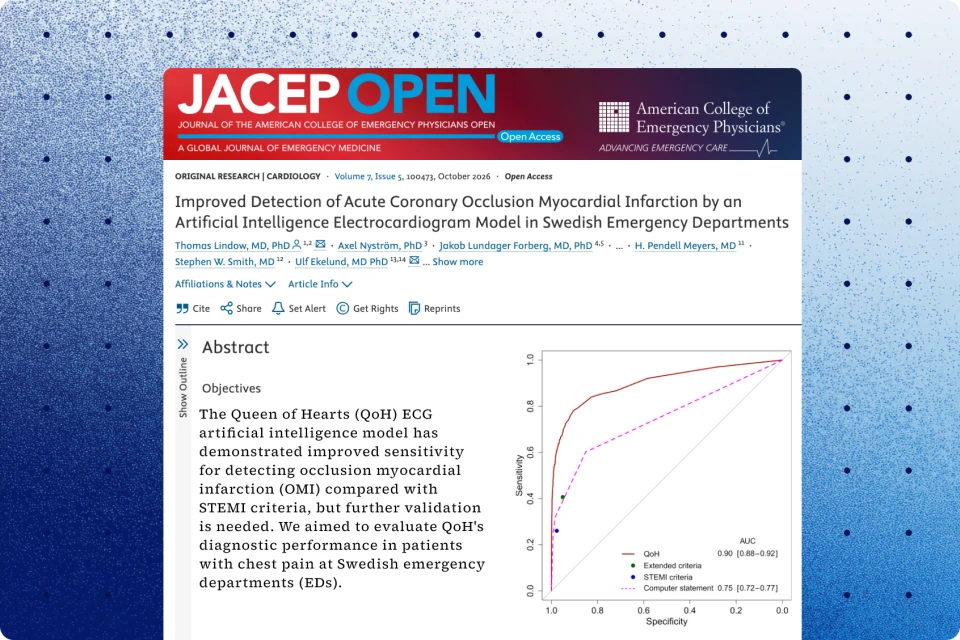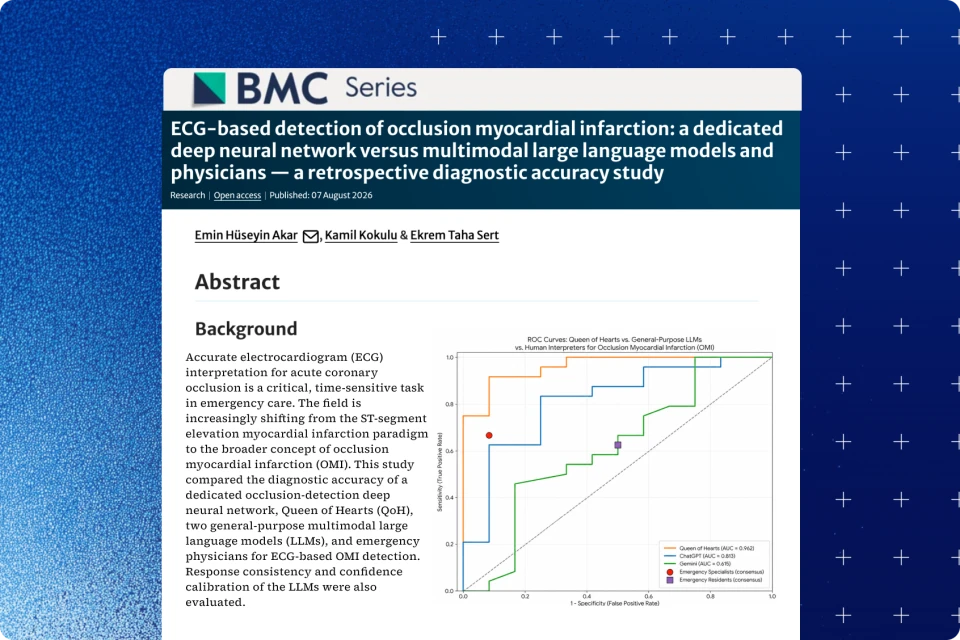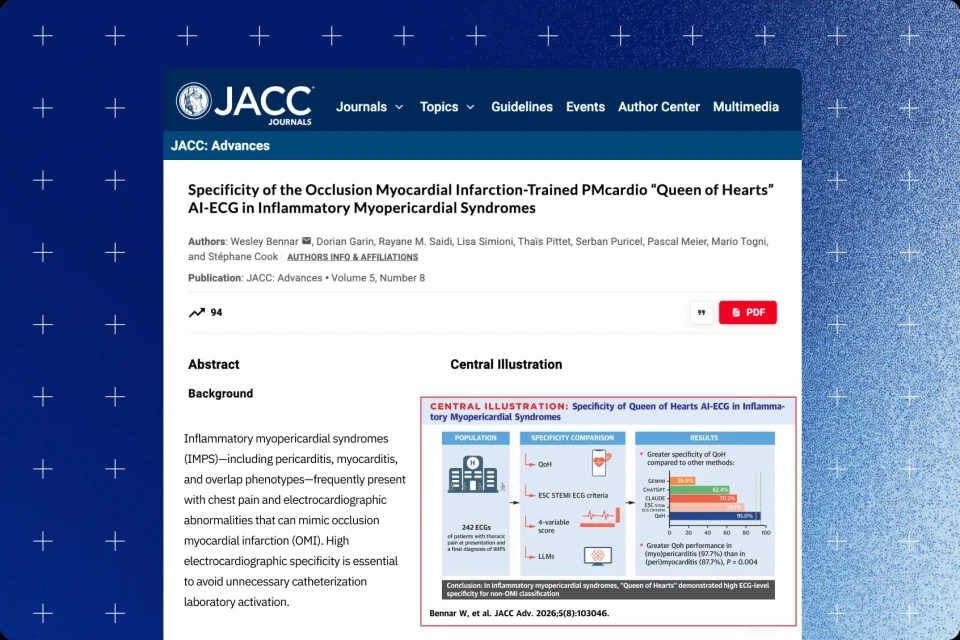

The Crucial Role of Image Quality in AI-enabled ECG Digitization and Interpretation of Occlusion Myocardial Infarction
Overview
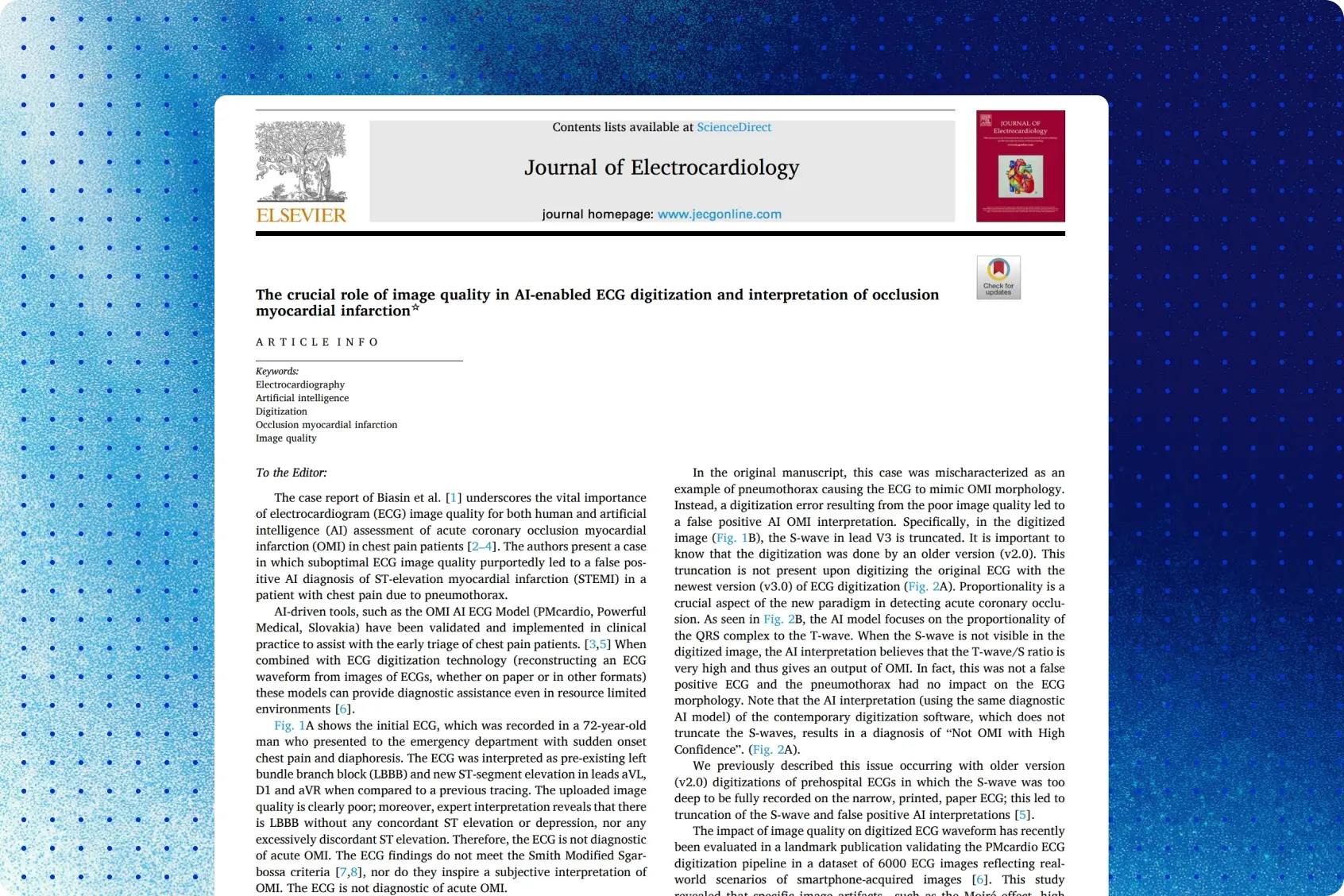
The effectiveness of AI-ECG tools depends on the quality of input data—poor ECG image quality can lead to critical misdiagnoses. This case shows how a low-quality scan triggered a false STEMI alert, later corrected with improved digitization. It underscores the importance of ensuring minimally acceptable image quality, as even advanced tools can’t fully correct severe distortions.
Key findings
- A low-quality ECG scan produced a false STEMI alert.
- Improved digitization corrected the interpretation.
- AI-ECG accuracy depends on minimally acceptable image quality.
Published in: Journal of Electrocardiology Date of Publication: January 10, 2025
Highlights
- Acceptable digitization of ECG images requires a minimal quality of input
- Contemporary digitization by the PMcardio digitization software can correct many, but not all, distortions and deletions
- Proportionality between QRS and ST/T is crucial; truncation of any part of the QRS or ST/T distorts these proportions.
Share this article



About PMcardio
PMcardio is the market leader in AI-powered diagnostics, addressing the world’s leading cause of death – cardiovascular diseases. The innovative clinical assistant empowers healthcare professionals to detect up to 40 cardiovascular diseases. In the form of a smartphone application, the certified Class IIb medical device interprets any 12-lead ECG image in under 5 seconds to provide accurate diagnoses and individualized treatment recommendations tailored to each patient.

About Powerful Medical
Powerful Medical leads one of the most important shifts in modern medicine by augmenting human-made clinical decisions with artificial intelligence. Our primary focus is on cardiovascular diseases, the world’s leading cause of death.
Established in 2017, Powerful Medical has embarked on a mission to revolutionize the diagnosis and treatment of cardiovascular diseases. We are a medical company backed by 28 world-class cardiologists and led by our expert Scientific Board with decades of experience in daily patient care, clinical research, and medical devices. The results of our research are implemented, developed, certified, and brought to market by our 50+ strong interdisciplinary team of physicians, data scientists, AI experts, software engineers, regulatory specialists, and commercial teams.