
How Sant'Andrea Brought AI ECG Alerts Into Its STEMI Pathway
Discover how Sant'Andrea University Hospital in Rome reached a median door-to-balloon time of 56 minutes by embedding PMcardio's AI-powered ECG analysis into the ECG infrastructure and DECT handsets its teams already use. Over six months, 94% of cases were treated within the 90-minute window.
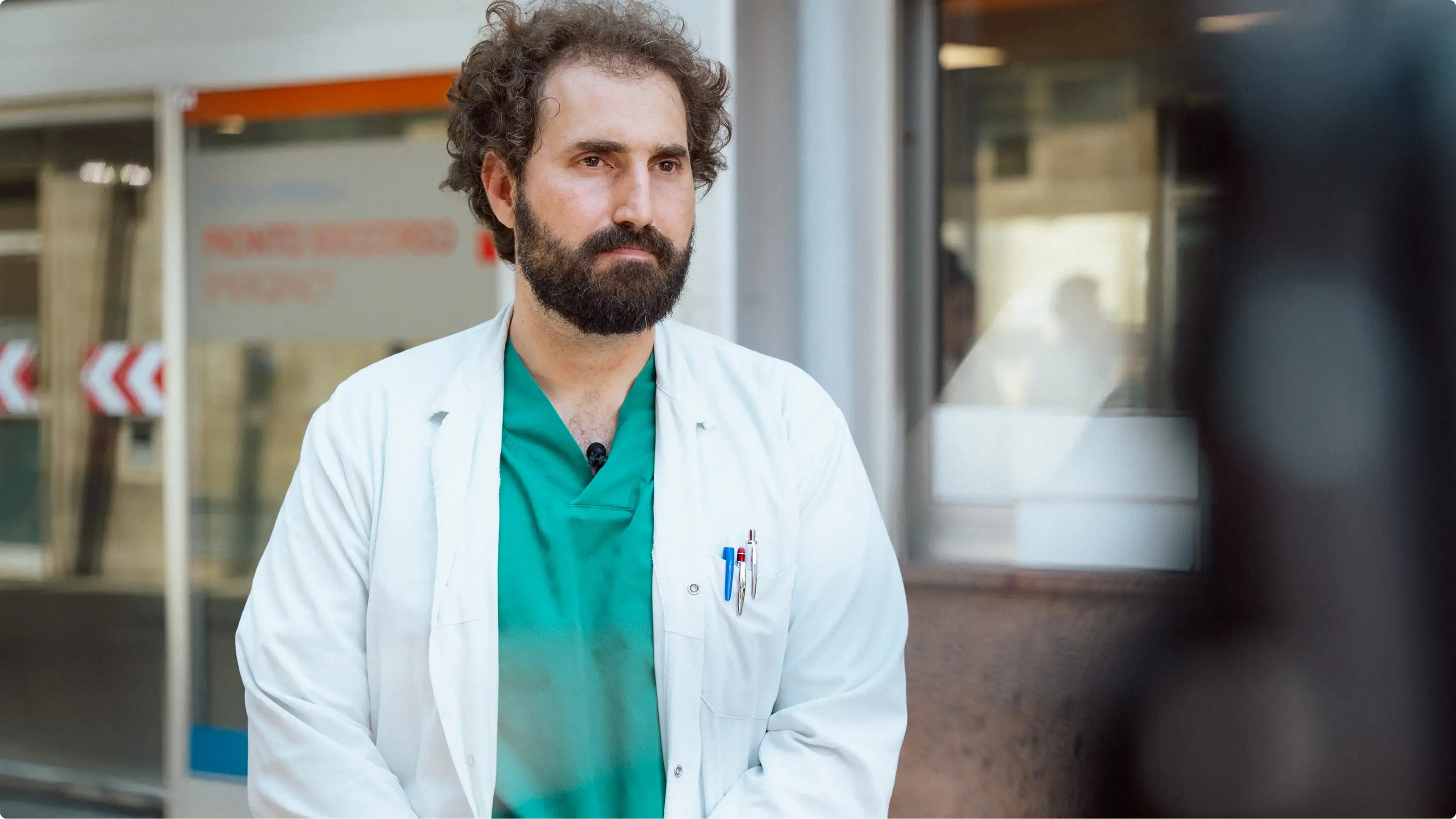
Sant'Andrea University Hospital (Azienda Ospedaliero-Universitaria Sant'Andrea) is a public teaching hospital of Sapienza University of Rome and the home of Sapienza's Faculty of Medicine and Psychology.
Opened in 2001 on the northern edge of Rome, the 460-bed hospital serves four Roman municipalities and some thirty towns beyond the ring road, handling more than 45,000 emergency department admissions each year. It is a PCI-capable centre, with the emergency department, cardiology and its coronary care unit, and two angiography suites on one site. Primary PCI is available around the clock.
Sant'Andrea's emergency department was already meeting the European target of a 12-lead ECG within 10 minutes of arrival. The delay lay after that point: tracings waited for a free physician, and cardiology was consulted before the cath lab was called. To close that gap, Sant'Andrea connected its Cardioline ECG infrastructure to PMcardio. Every ECG is now analyzed automatically by the Queen of Hearts™ AI model, and high-risk results reach cardiology on the DECT handsets they already carry. Read the announcement: Rome's Sant'Andrea University Hospital rebuilds its heart attack pathway around AI.
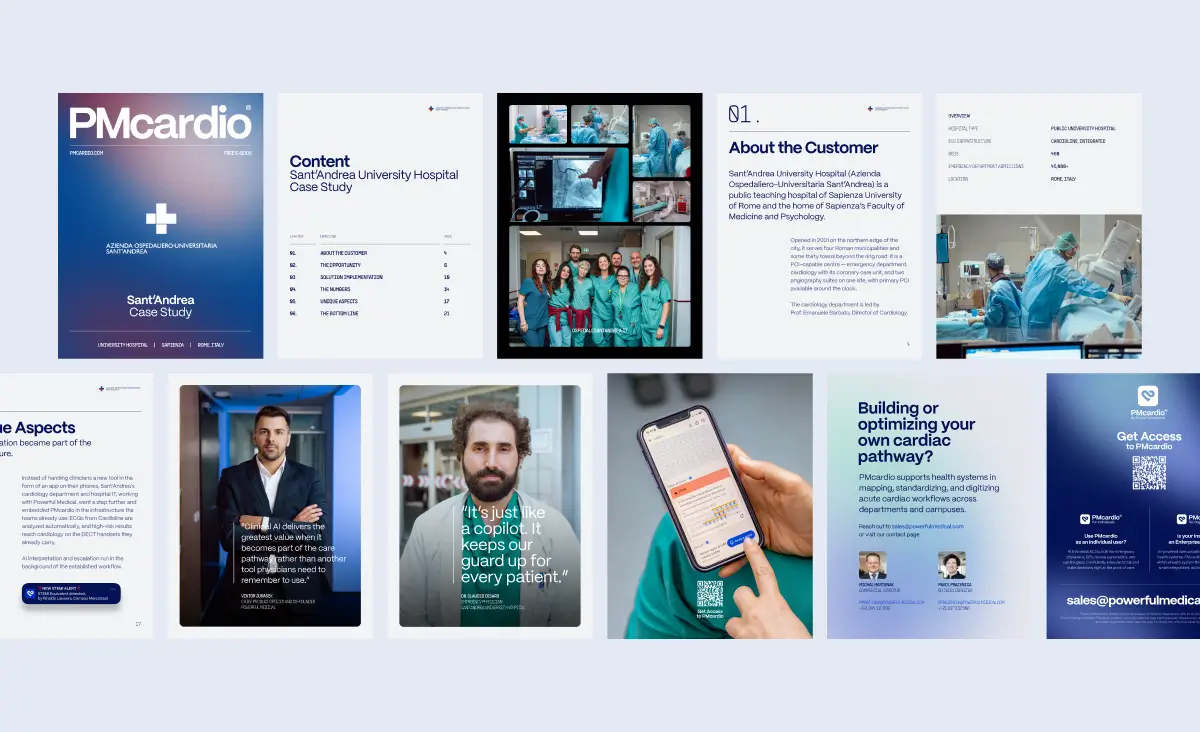
What You'll Learn in the Full Case Study:
- How Sant'Andrea embedded AI ECG analysis into existing Cardioline and DECT infrastructure instead of adding another app
- How the Queen of Hearts™ AI model flags STEMI equivalents, which made up 64% of all STEMI alerts
- How automatic alerting lets cardiology open a high-risk ECG report within a median of 17 seconds
- How the hospital moved from pilot to fully integrated pathway in less than a year
- How a tracing read as non-STEMI turned out to be an occluded right coronary artery
- What six months of real-world data show: 5,629 ECGs analyzed, 138 STEMI alerts, and 84 clinicians on the pathway
Outcome for Cardiologists
- Faster ECG interpretation (seconds instead of minutes)
- Reduced diagnostic workload
- Higher confidence in complex or subtle ECG findings
- Improved triage accuracy
- Better communication with GPs and remote clinics
- Safer and more efficient emergency workflow
- Standardized ECG documentation across the department

Share this article