
Powerful Medical Receives €40 Million IPCEI Grant — read the full story

Powerful Medical
7. December 2022

Powerful Medical’s 2022: A year in review
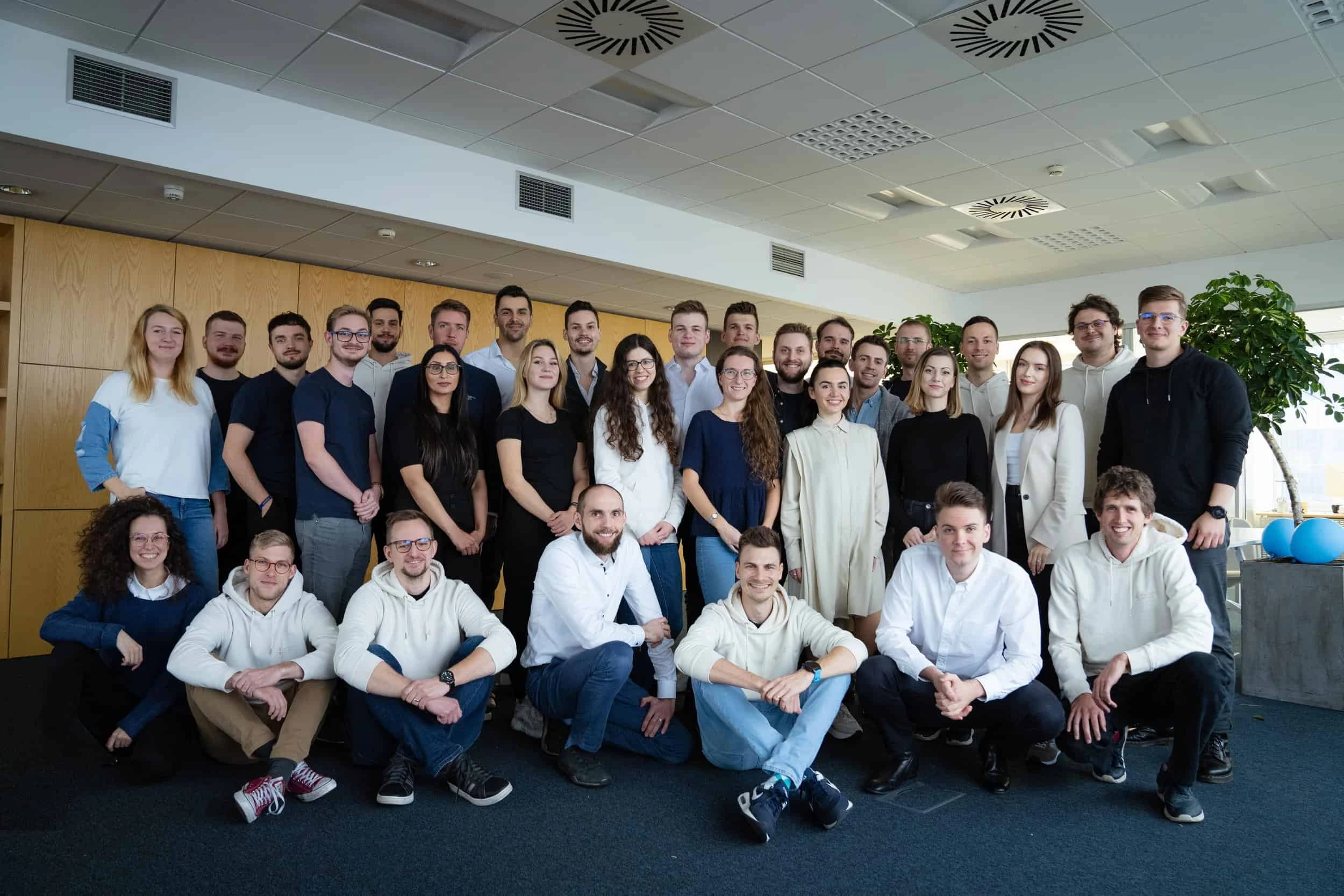
What a year 2022 has been. For us at Powerful Medical, 2022 was a year of maturing and growth. We went through many changes, both as a business, as well as a team.

As we write these lines, we believe that this year has brought us closer to fulfilling our mission of revolutionising cardiovascular care with AI and saving the lives of cardiac patients.

So, what have we achieved in 2022? We welcome you to read through the 10 highlights of Powerful Medical that defined this year for us.

#1. Became a fully certified medical device

Our team worked tirelessly for the past year to get our medical platform PMcardio certified by TÜV SÜD, one of the world’s most trusted product certification companies. Becoming a TÜV certified device means our product meets the highest industry standards and ensures the highest level of performance and safety.

We also became an ISO 13485 certified medical device manufacturer for AI-powered diagnostics and treatment and successfully certified PMcardio as a Class IIb Medical Device under the EU Medical Device Regulation 745/2017 (MDR).

Today, we are proud to say that PMcardio is the world’s first CE-certified AI-powered platform for diagnosing and treating cardiovascular diseases.

#2. Raised €6.2 million in seed funding

In September, we shared the exciting news of raising €6.2 million in our seed funding round. We thank our investors – Venture To Future Fund (VFF), CB ESPRI Impact One, bpd partners, and several angel investors for putting their faith in us.

Their funds will not only help us further our company vision but also hire more talent and set us on a journey to strengthen our market potential, expand globally, and monetise our core product, PMcardio.

#3. Improved PMcardio’s diagnostic performance

Our AI team worked around the clock over the past year, improving not only the diagnostic performance of our Cardio AI Cloud but also notably speeding up our algorithms.

We are proud to share that PMcardio can now aid medical professionals in detecting 15 more diagnoses.

We expanded our diagnoses from 23 to 38 over the course of this year. These include various arrhythmias and conduction system abnormalities, such as the Long QT Syndrome – a potentially life-threatening condition that is often drug-induced and asymptomatic.

Our diagnostic algorithms have also become much more precise. PMcardio 2.6 has seen a reduction in diagnostic error by 67% compared to PMcardio 2.4.

Speed matters much to physicians, and so PMcardio 2.6 also got notably faster – the overall average time to diagnosis went down from 5 to 2.5 seconds – marking a 50% reduction.

#4. Got PMcardio ready for launch

The year of 2022 was all about preparing our medical assistant PMcardio for an official launch. Many long days and countless hours were put into perfecting the 2.6 version of PMcardio.

After submitting all the technical documentation to the certification bodies in October, we are finishing up the preparations to deliver the app to the app stores in early 2023. Stay tuned!

#5. Launched our brand new website

In September, our newly formed marketing team started to work on our new website, which you can discover here.

The goal of the new web was to express our company vision better and communicate PMcardio in a way that aligns with our future plans.

In the words of our chief brand designer, Adriana Danekova:

“The new web features fresh, innovative visuality that reflects the values of our brand. The main elements combine the modern, technology-driven spirit of our brand with the visual clarity characteristic of the medical industry.”

#6. Moved to our new beautiful office

As a bigger team, we also needed a bigger space where we could do our best work. In October, we moved to a new, almost 600-square-meter office on the 20th floor with a magnificent view of the Bratislava skyline.

This is a great milestone for us as before, we felt to be a classic “garage” startup, working from a small house in a suburb. Moving to our new office marks the beginning of a new chapter – becoming a more mature and experienced company.

To share this joy with our investors, partners and friends, we held an event in November where we celebrated the reveal of the new space as well as our C-suite shared company updates.
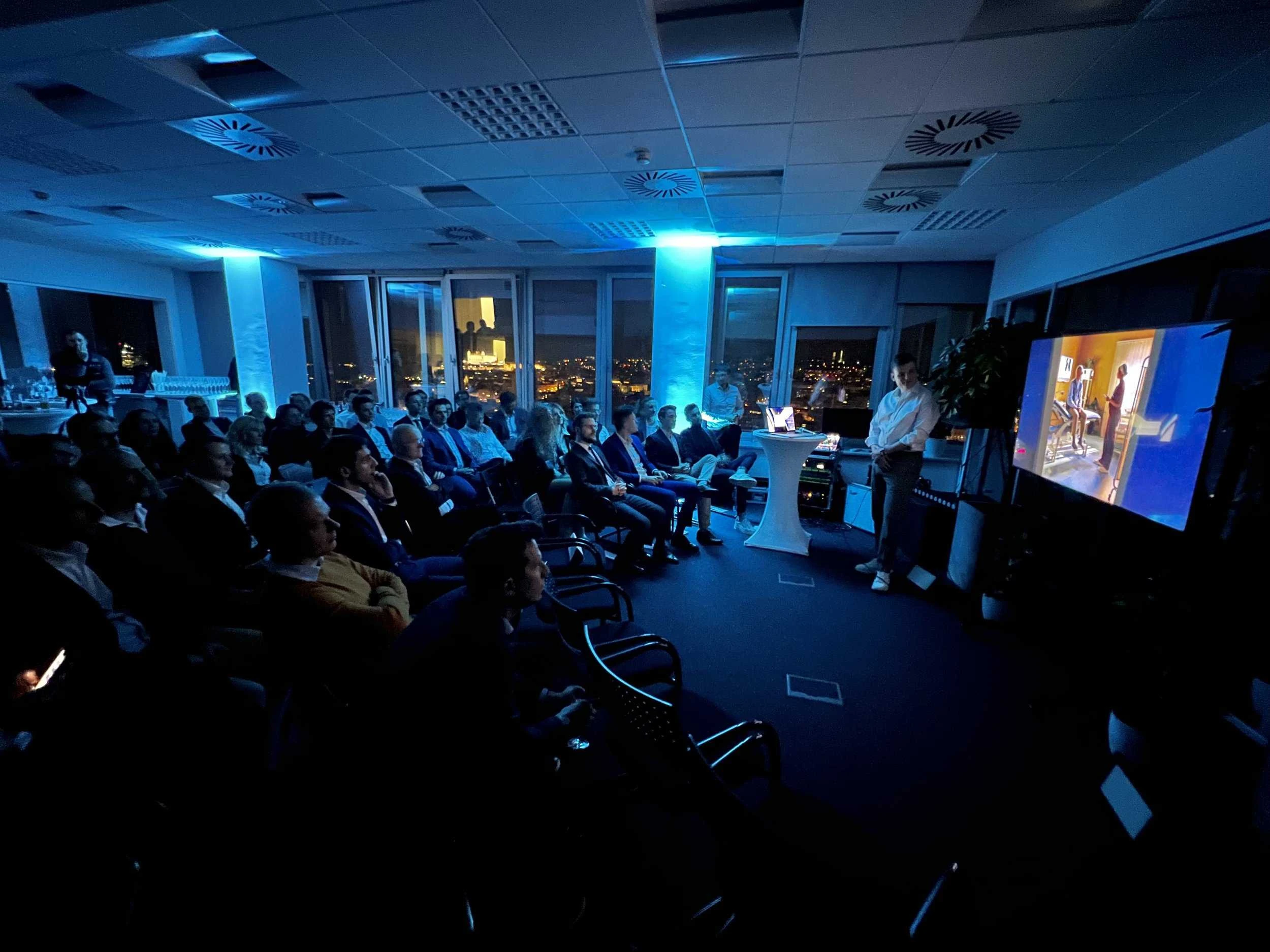
An image from Powerful Medical's investor event showing the CEO of Powerful Medical Martin Herman speaking to an audience

#7. Our team grew bigger by 22 new colleagues

Our goals would not have been possible to reach without the right team of people. In the year 2022, we symbolically hired 22 amazing new people. We also filled in some crucial roles such as Financial Lead, Front End Lead, Customer Success Manager and Brand Designer.

Our team now consists of 50+ employees, including physicians, data scientists, AI experts, software engineers, marketing professionals, and other world-class professionals at the top of their respective fields.

#8. Gained clinical weight, validation and recognition

Gathering clinical evidence plays a crucial role in the success of startups and medical devices in the digital health sector. To validate the claims of PMcardio – its added value in primary care and to demonstrate our comprehensive understanding of clinical robustness across the industry, we have successfully performed our own multi-centric randomised controlled clinical trial with 60 participating primary care practices. At this stage, we have successfully completed patient enrolment for our clinical trial, which proved to be the largest randomised control trial focused on using AI in cardiology in Europe.

To enhance the future potential of PMcardio, we kicked off the research on future modules of our platform and published our first clinical study in the ESC Heart Failure Journal, focused on assessing all-cause mortality in patients hospitalised with heart failure. Constantly driving the force of innovation in medical technology, we understand the importance of meaningful partnerships. Hence we are proud to share that we expanded our network of clinical research partners, including the University Medical Center Utrecht, Imperial College London, and the University of Turin.

#9. Improved our treatment recommendations engine

Physicians need to be familiar and up-to-date with thousands of pages worth of medical practice guidelines. There is a separate guideline for every cardiovascular diagnosis and the guidelines change every two or three years. This makes it challenging for practitioners to keep up.

The newest version of PMcardio provides precise treatment recommendations that are based on the latest medical practice guidelines – all readily available within the app.

For each diagnosis we support, there is an intricate recommendation decision tree. After digitising an ECG, a practitioner simply needs to enter basic patient parameters such as age, gender, symptoms and answer some anamnestic questions. Our treatment recommendation engine will suggest specific treatment steps and help physicians make immediate medical decisions.

#10. Had the chance to present and speak at top-notch events

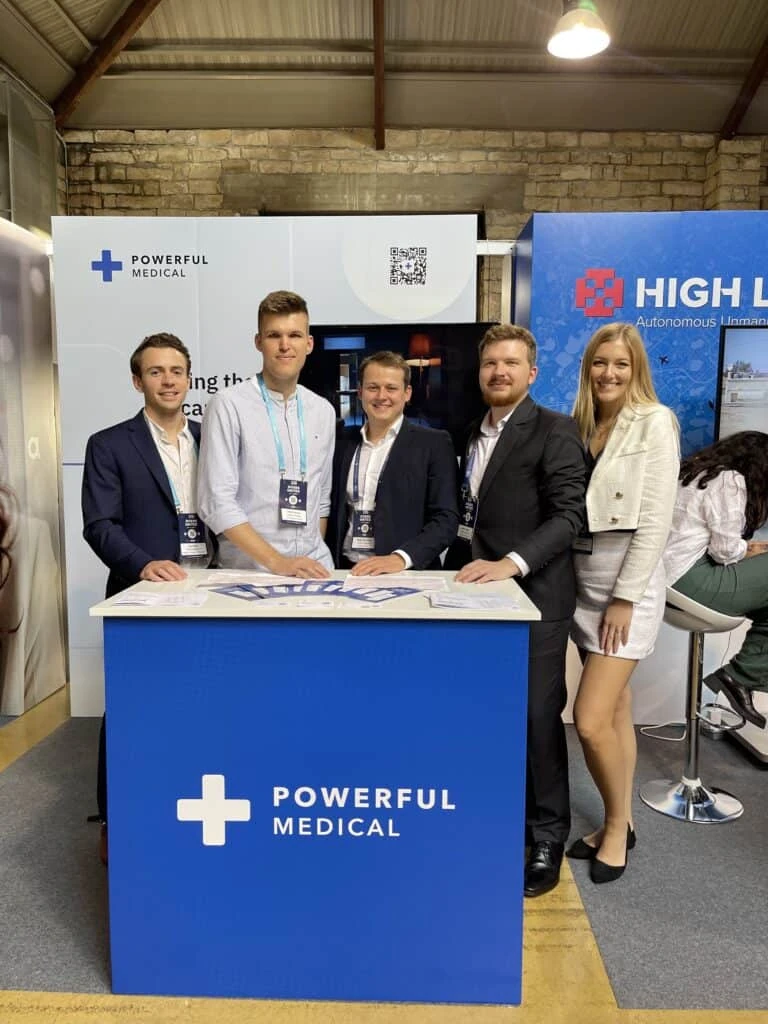
Throughout 2022, we got the chance to be part of multiple high-profile events around the world.

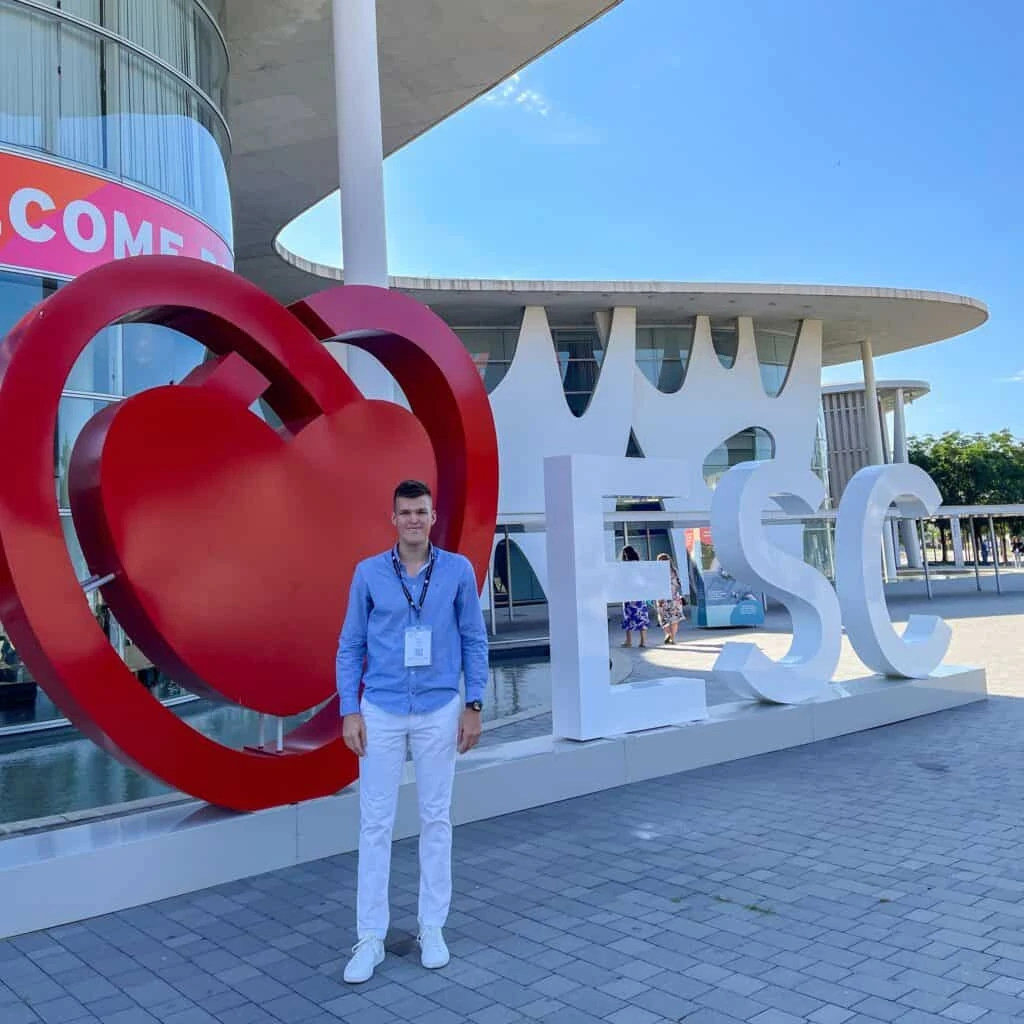
Just to name a few, our Chief Medical Officer and Co-Founder Robert Herman presented at the European Society of Cardiology Congress in Barcelona for the 4th year in a row.

In October, we had the chance to present our company and PMcardio at the Reflect Festival in Limassol, Cyprus. We were pleased to receive phenomenal feedback from the tech and business community on our product, company, and mission to modernise healthcare and save the lives of cardiovascular patients through the use of artificial intelligence.

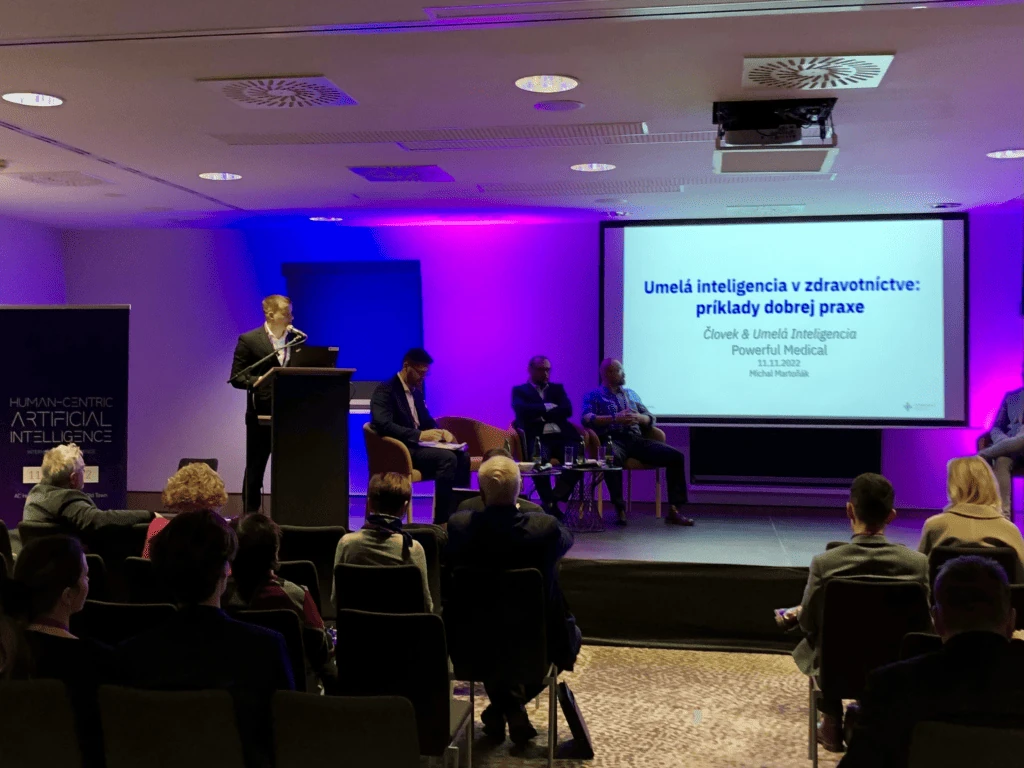
Our Head of Data, Michal Martonak, presented at the Human Centric Artificial Intelligence Conference organised by the European Commission, where he talked about how we tackle ethical aspects we face throughout the AI algorithm development process from a data perspective.
Powerful Medical

Powerful Medical leads one of the most important shifts in modern medicine by augmenting human-made clinical decisions with artificial intelligence. Our primary focus is on cardiovascular diseases, the world’s leading cause of death.
About PMcardio:

PMcardio is a CE-certified AI that reads ECGs and offers a complex assessment of 49 cardiac conditions. Clinically validated in 15+ studies and trusted by over 100,000 clinicians, it delivers rapid, expert‑level interpretations, empowering emergency physicians, GPs, nurses, paramedics, and cardiologists to act with confidence at the point of care. Available for Individuals and Organizations.

About Powerful Medical:

Established in 2017, Powerful Medical has embarked on a mission to revolutionize the diagnosis and treatment of cardiovascular diseases. We are a medical company backed by 28 world-class cardiologists and led by our expert Scientific Board with decades of experience in daily patient care, clinical research, and medical devices. The results of our research are implemented, developed, certified, and brought to market by our 50+ strong interdisciplinary team of physicians, data scientists, AI experts, software engineers, regulatory specialists, and commercial teams.

Share this article

Don't miss these

Powerful Medical team receiving the MedTech Innovator 2025 Mid-Stage Grand Prize award on stage, holding a large winner’s check.

Powerful Medical Wins MedTech Innovator 2025

Powerful Medical has been named MedTech Innovator 2025, winning MTI’s Mid-Stage Grand Finals—top honor from the world’s largest medtech accelerator. The award recognizes PMcardio and its FDA Breakthrough-designated Queen of Hearts™ AI ECG technology, which doubles sensitivity for detecting severe heart attacks and significantly cuts ECG-to-balloon time in large clinical trials.

PMcardio Reports Positive RCT Results and Late-Breaking Clinical Science for STEMI Detection

PMcardio’s AI-powered ECG technology delivers breakthrough results at TCT 2025—improving heart attack detection, reducing false activations, and enabling faster treatment across major clinical trials, including the landmark DIFOCCULT-3 RCT.

Join over 100,000 healthcare professionals who are already taking advantage of AI

All Supported ECG Findings

Rhythms
Sinus bradycardia • Sinus rhythm • Sinus tachycardia • Paced rhythm • Atrial fibrillation
Atrial fibrillation with rapid ventricular response • Atrial fibrillation with slow ventricular response • Atrial flutter • Atrial flutter with rapid ventricular response • Atrial flutter with slow ventricular response • Supraventricular tachycardia • Suspected junctional rhythm • Suspected junctional bradycardia • Suspected accelerated junctional rhythm • Wide QRS rhythm • Idioventricular rhythm • Wide QRS tachycardia

Myocardial Infarctions
  • STEMI
  • STEMI
    Equivalent
Detects occlusive myocardial infarctions (OMIs) even without ST elevation (i.e. posterior STEMI, hyperacute T-waves, etc.). Negative for STEMI mimics (i.e. early repolarization, LVH, etc.)
  • High-Risk NSTEMI
    Represents a type 1 myocardial infarction caused by a transiently recanalized coronary occlusion—classically seen in patterns such as Wellens type A or B due to subtotal LAD obstruction, but possible in any infarct-related territory.
  • Culprit Detection
    AI-predicted likelihood scores for LAD, LCx, and RCA with 3D heart visualization highlighting the predicted culprit artery.

Conduction Abnormalities (Heart Blocks
1st degree AV block • 2nd degree AV block, type Wenckebach • Higher degree AV block • Complete right bundle branch block • Incomplete right bundle branch block • Complete left bundle branch block • Incomplete left bundle branch block • Nonspecific intraventricular conduction delay • Left anterior fascicular block • Left posterior fascicular block • Bifascicular block (RBBB + LAFB) • Bifascicular block (RBBB + LPFB) • Trifascicular block (RBBB + LAFB + AVBLOCK1) • Trifascicular block (RBBB + LPFB + AVBLOCK1)

LVEF
Reduced LVEF (≤40%) • Mildly reduced LVEF (41 – 49%) • No signs of reduced LVEF (≥50%)

Axis
Left cardiac axis deviation • Right cardiac axis deviation • Extreme cardiac axis deviation • Normal axis

Measurements
Heart rate • P wave • PR interval • QRS duration • QT interval • Corrected QT interval (Framingham formula) • RR interval • PP interval • ST elevations

Other Supported Diagnoses
Suspected long QT syndrome • Suspected short QT syndrome • Suspected atrial enlargement • Suspected ventricular hypertrophy • Premature complexes

Dr. Tom De Potter, MD

Cardiologist at the Cardiac Center Aalst

Cardiologist specializing in Pacemaker Device Therapy and Electrophysiology. Leads the electrophysiology unit at the Heart Center in Aalst, holds an executive board position at the European Heart Academy, and serves as EHRA scientific program committee co-chair.

Dr. Martin Penicka, MD, PhD

Cardiologist at the Cardiac Center Aalst

Cardiologist at the Cardiac Center Aalst since 2009, specializing in non-invasive imaging and valvular disease. Fellow of the European Society of Cardiology (FESC) and the European Association of Cardiovascular Imaging (FEACVI).

Dr. Ward Heggermont, MD, PhD

Co-director at the Cardiovascular Center

Co-director at the Cardiovascular Center of Aalst Hospital, specializing in heart failure. Research focus at the intersection of cardiology, virology, and metabolism.

Prof. Dr. Robert Hatala, PhD

Co-founder and Chief Scientist

Head of the Arrhythmia and Pacing department at the National Institute of Cardiovascular Diseases in Slovakia. More than 150 publications and 10,000 citations. Contributor to ESC clinical practice guidelines and executive editor of the European Heart Journal since 2020.

Arieh Levy

Head of PMcardio for Individuals

Arieh leads the PMcardio for Individuals product at Powerful Medical, guiding its development as a clinical tool for emergency physicians, cardiologists, and primary care physicians. He holds a First Class MEng in Biomedical Engineering from Imperial College London, where he specialised in AI for cardiology, building physics-informed neural networks to model atrial electrical properties, giving him a background that bridges the clinical and technical demands of building a certified AI medical device used at the bedside every day.

Dr. Dave Pearson, MD​

Chief Medical Officer

Academic emergency medicine physician, entrepreneur, investor, and researcher with nearly two decades at Atrium Health, one of US largest health systems. Brings expertise at the intersection of clinical care, healthcare innovation, and strategic leadership.

Prof. Stephen W. Smith, MD

Professor of Emergency Medicine

Faculty physician in Emergency Medicine at Hennepin County Medical Center and Professor of Emergency Medicine at the University of Minnesota. Co-inventor of the OMI paradigm and editor of Dr. Smith’s ECG Blog, the most-visited US-based ECG interpretation blog.

Prof. Emanuele Barbato, MD, PhD

President of EAPCI

Interventional cardiologist specializing in coronary artery disease and coronary physiology. Acting president of the European Association of Percutaneous Cardiovascular Interventions (EAPCI) and contributor to the clinical practice guidelines for STEMI care.

Scott Sharkey, MD

Chief Medical Officer

Chief Medical Officer of the Minneapolis Heart Institute Foundation and practicing cardiologist at Allina Health Minneapolis Heart Institute. Co-founder of the STEMI Midwest consortium and Takotsubo cardiomyopathy research program and a widely published clinical investigator in STEMI care.

Prof. Dr. Leor Perl, MD

Director of Cardiac Catheterization Institute

Director of Complex Cardiac Interventions and Chief Innovation Officer at Rabin Medical Center. Graduate of the Stanford Biodesign Program.

Suzanne J. Baron, MD, MSc

Director of Interventional Cardiology Research

Director of Interventional Cardiology Research at Massachusetts General Hospital. Holds a Master’s degree in health economics from Harvard School of Public Health. Expert in cardiovascular device impact on healthcare costs and patient-reported outcomes.

Prof. Marco Valgimigli, MD

Deputy Chief Cardiocentro Ticino Institute

Head of Cardiology at Cardiocentro Ticino and Principal Investigator of the TITAN-OMI randomized controlled trial. His research has shaped both European and US clinical practice guidelines on coronary stents, antithrombotic therapy, and vascular access.

Timothy D. Henry, MD

Medical Director of The Carl and Edyth Lindner Center

Leading expert in interventional cardiology and STEMI treatment. Co-founder and principal investigator of the Midwest STEMI Consortium, a registry of more than 20,000 consecutive STEMI activations. Presenting author for the TCT 2025 Late-Breaking Clinical Science on Queen of Hearts.

Matus Horvath

Head of People

Matus leads hiring strategy and culture at Powerful Medical. He previously ran the People Team at Slido, the Slovak SaaS startup later acquired by Cisco — an experience that informs how he builds a high-performing, values-driven team through rapid scaling.

Dr. Timea Kisova, MD

Clinical Research Lead

Timea leads Powerful Medical’s global external validation studies, including the multi-country AI ECG TIMI Study. With a background in biomedical sciences and a medical degree from Barts and The London School of Medicine and Dentistry, she brings the clinical discipline required to generate the prospective, real-world evidence behind every PMcardio module.

Dr. Anthony Demolder, MD, PhD

HF Pathway Lead

Research physician with a PhD on arrhythmias in heritable thoracic aortic disease. He has led international studies at the intersection of cardiology and AI — including earlier work on atrial fibrillation at AZ Sint-Jan Brugge — and now drives Powerful Medical’s heart failure pathway and LVsense™ AI model development.

Dr. Pendell Meyers, MD

ACS Pathway Lead

Emergency medicine physician, prolific educator, and Co-Editor of Dr. Smith’s ECG Blog. He is one of the leading voices behind the Occlusion Myocardial Infarction (OMI) paradigm, the clinical framework that reshaped how heart attacks are identified from the ECG — and which sits at the core of the Queen of Hearts™ model.

Adam Dej

Head of PMcardio for Organizations Engineering

Adam leads engineering for PMcardio for Organizations at Powerful Medical, driving platform architecture, backend systems, and infrastructure behind one of the company’s key growth products. He began programming at 13, entered professional IT at 17, and studied computer security at Comenius University’s Faculty of Mathematics, Physics and Informatics. Known for technical depth across distributed systems, infrastructure, and security, he builds scalable and resilient software with a sharp focus on customer impact. He also champions responsible use of AI and LLMs as force multipliers for modern engineering teams.

Gabriela Rovder Sklencarova

Head of Infrastructure

Gabriela designs the scalable, secure, distributed systems that keep PMcardio running around the clock for clinicians worldwide. She joined from Google, where she was a senior software engineer building core libraries that kept Google’s services resilient against billions of requests, and holds a BA and MA in Computer Science from the University of Cambridge.

Arezou Azar

VP Regulatory

Arezou leads Powerful Medical’s global regulatory strategy across the FDA, EU MDR, and international frameworks. She has been part of nearly every major breakthrough in AI cardiology and is an expert in US and global regulatory strategy, SaMD/digital health launches, with experience at Eko Health, Verily, AliveCor, Cardiologs, and Apple. She specializes in regulatory strategy in high-paced global organizations.

Adam Rafajdus

Head of AI

Adam grew into the Head of AI role from MLOps Engineer over six years at Powerful Medical, bringing deep expertise in deep learning and production-grade system deployment. He leads the team behind the Queen of Hearts™ AI ECG models and was awarded Best Poster at ISCE 2025 for the company’s ECG digitization pipeline.

Mike Wall

VP of Sales

Mike brings more than twenty years at UnitedHealth Group to the table, where he served health plans, employer groups, and public-sector entities as a consultative healthcare sales executive. He combines market intelligence, clinical insight, and financial acumen — the three ingredients needed to bring AI-powered diagnostics into US health systems at scale.

Amani Farid

Head of Strategic Partnerships

Amani leads partnership strategy with a hands-on approach to integration, unlocking long-term value through collaboration and scale. A University of Chicago Law School-trained attorney and former M&A and capital markets associate at two top international law firms, she brings the rare combination of legal precision and commercial execution refined across nearly a decade at Stryker and as VP of Corporate Development at RapidAI — spanning medtech, digital health, and AI-driven diagnostics.

Michal Martonak

Commercial Lead

A mathematician by training, Michal leads commercial strategy, go-to-market, and strategic partnerships with healthcare providers and clinical institutions worldwide. He previously built Powerful Medical’s data and clinical partnerships function, acquiring the large-scale clinical datasets that underpin the company’s certified AI models.

Dr. Jozef Bartunek, MD, PhD

Co-founder and VP Clinical Strategy

Interventional cardiologist and Co-director of the Cardiovascular Center in Aalst, Belgium — one of the world’s leading heart centers. A Fogarty International NIH Fellow at Harvard Medical School and visiting Professor of Medicine at Catholic University Leuven, he has authored more than 240 peer-reviewed publications in heart failure and structural heart disease, and anchors Powerful Medical’s clinical and research strategy.

Simon Rovder

Co-founder and CTO

Simon began his engineering career at Microsoft and holds a Master’s in Informatics from the University of Edinburgh. He built Powerful Medical’s technology organization from zero, scaling it to a 20+ engineer team and leading the platform architecture that powers a CE-certified Class IIb medical device used in hospitals across Europe.

Viktor Jurasek

Co-founder and CPO

Viktor has spent over a decade designing digital products across healthcare and software and has been the design and product force behind PMcardio since the first prototype. He sets the bar for how a clinical-grade product should feel in a physician’s hands — fast, clear, and trustworthy at the point of care.

Felix Bauer

Co-founder and COO

Felix studied at the Technical University of Munich and was part of the TUM Hyperloop team that repeatedly competed and won in Elon Musk’s SpaceX Hyperloop Pod Competition. He brings a rare combination of engineering rigor, regulatory discipline, and operational excellence to the company, leading operations, compliance, certification, quality management, and global market access since day one.

Dr. Robert Herman, MD, PhD

Co-founder and Chief Medical Officer

Robert is a physician-scientist, served on the Research, Digital and Innovation Committee of the European Society of Cardiology. He bridges the worlds of medicine and artificial intelligence, connecting clinicians, AI researchers, and regulators to translate algorithms into clinical practice. Forbes 30 Under 30 Europe 2024.

Martin Herman

Co-founder and CEO

Martin started coding at 14 and moved to Silicon Valley at 18, founding several companies including a US-based startup before returning to Europe with his brother Robert to build Powerful Medical. He comes from a family of doctors, which shaped his conviction that AI belongs wherever it can genuinely save lives. Forbes 30 Under 30 (Europe 2024).

Heart Attacks are #1 cause of death world-wide and killing about 12 milions people a year.

Clinical Definition of Problem

Contrary to popular belief, a heart attacks isn’t a blockage inside of the heart. A heart attack is a blockage of the coronary arteries supplying the heart muscle with oxygenated blood.

So let’s assume you get a blood clot here — it blocks the blood flow downstream, meaning the heart muscle doesn’t get oxygenated blood and heart tissue downstream starts to die.

Clinical Solution​

The way to fix it is relatively simple – doctors put in a stent that opens up the artery and renews blood flow. The latest clinical practice guidelines recommend that this “stenting” happens within 90 minutes from symptom onset.

If you don’t, even if you put in the stent in later, the heart tissue downstream has already been permanently damaged, which reduces the heart’s ability to pump blood. This is the leading cause of heart failure and increases 1-year mortality by two-fold.

Time is muscle.

You have just 90 minutes to diagnose the patient, bring them to the hospital and put in the stent, otherwise there is permanent damage. So problem is, that 1 in 2 heart attacks get initially misdiagnosed at the first point of contact.

Discover the future of medical work with us.

Lorem ipsum dolor sit amet, consectetur adipiscing elit. Ut elit tellus, luctus nec ullamcorper mattis, pulvinar dapibus leo.