Powerful Medical Receives €40 Million IPCEI Grant — read the full story

Powerful Medical
12. September 2024
3 min to read

Artificial Intelligence Driven Prehospital ECG Interpretation for the Reduction of False Positive Emergent Cardiac Catheterization Lab Activations

Overview:

Activating the cardiac catheterization lab too frequently can strain healthcare resources, yet overlooking an acute myocardial infarction carries significant risk. Evaluated in a prehospital setting by Hennepin Emergency Services (USA), the PMcardio STEMI AI ECG Model showed potential to optimize emergency cardiac care and improve resource efficiency by reducing false catheterization lab activations by 34% without missing any “true” heart attacks.

Published In: Pre-hospital Emergency Care
Presented Date: September 12, 2024

Objectives

Data suggest patients suffering acute coronary occlusion myocardial infarction (OMI) benefit from prompt primary percutaneous intervention (PPCI). Many emergency medical services (EMS) activate catheterization labs to reduce time to PPCI, but suffer a high burden of inappropriate activations. Artificial intelligence (AI) algorithms show promise to improve electrocardiogram (ECG) interpretation. The primary objective was to evaluate the potential of AI to reduce false positive activations without missing OMI.

Methods

Electrocardiograms were categorized by (1) STEMI criteria, (2) ECG integrated device software and (3) a proprietary AI algorithm (Queen of Hearts (QOH), Powerful Medical). If multiple ECGs were obtained and any one tracing was positive for a given method, that diagnostic method was considered positive. The primary outcome was OMI defined as an angiographic culprit lesion with either TIMI 0–2 flow; or TIMI 3 flow with either peak high sensitivity troponin-I > 5000 ng/L or new wall motion abnormality. The primary analysis was per-patient proportion of false positives.

Results

A total of 140 patients were screened and 117 met criteria. Of these, 48 met the primary outcome criteria of OMI. There were 80 positives by STEMI criteria, 88 by device algorithm, and 77 by AI software. All approaches reduced false positives, 27% for STEMI, 22% for device software, and 34% for AI (p < 0.01 for all). The reduction in false positives did not significantly differ between STEMI criteria and AI software (p = 0.19) but STEMI criteria missed 6 (5%) OMIs, while AI missed none (p = 0.01).

Conclusions

In this single-center retrospective study, an AI-driven algorithm reduced false positive diagnoses of OMI compared to EMS clinician gestalt. Compared to AI (which missed no OMI), STEMI criteria also reduced false positives but missed 6 true OMI. External validation of these findings in prospective cohorts is indicated.


Authors: Peter O. Baker, Shifa R. Karim, Stephen W. Smith, H. Pendell Meyers,Aaron E. Robinson, Ishmam Ibtida, Rehan M. Karim, Gabriel A. Keller, Kristie A. Royce Michael A. Puskarich

Author-Logo_PM
Powerful Medical leads one of the most important shifts in modern medicine by augmenting human-made clinical decisions with artificial intelligence. Our primary focus is on cardiovascular diseases, the world’s leading cause of death.

About PMcardio

PMcardio is a CE-certified AI that reads ECGs and offers a complex assessment of 49 cardiac conditions. Clinically validated in 15+ studies and trusted by over 100,000 clinicians, it delivers rapid, expert‑level interpretations, empowering emergency physicians, GPs, nurses, paramedics, and cardiologists to act with confidence at the point of care. Available for Individuals and Organizations.

About Powerful Medical

Established in 2017, Powerful Medical has embarked on a mission to revolutionize the diagnosis and treatment of cardiovascular diseases. We are a medical company backed by 28 world-class cardiologists and led by our expert Scientific Board with decades of experience in daily patient care, clinical research, and medical devices. The results of our research are implemented, developed, certified, and brought to market by our 50+ strong interdisciplinary team of physicians, data scientists, AI experts, software engineers, regulatory specialists, and commercial teams.

Share this article

Relevant Publications

Chest Pain With Subtle But Lifesaving ECG Findings

This study presents a clinical case highlighting the diagnostic value of hyperacute T waves on electrocardiogram (ECG) for early detection of acute coronary occlusion. A 54-year-old woman presented with classic ischemic symptoms, yet her initial ECG was interpreted as normal by both automated analysis and clinician review. Closer inspection revealed subtle hyperacute T waves in the anterior leads, consistent with acute occlusion of the left anterior descending (LAD) artery. The case underscores how reliance on traditional ST-segment elevation criteria alone may delay recognition of life-threatening myocardial infarction.

AI-Enhanced Electrocardiogram for Detection of Occlusive Myocardial Infarction in High-Risk Non–ST-Segment Elevation Acute Coronary Syndrome

This study evaluates an AI-enhanced ECG model for detecting occlusive myocardial infarction (OMI) in patients with high-risk non–ST-segment elevation acute coronary syndrome, using angiography as the reference. The model improved rule-in accuracy with high specificity (78%) and reduced false-positive cath lab activations compared with standard care, while rule-out sensitivity remained limited on the initial ECG. Serial ECG analysis improved detection, supporting the use of AI as a triage aid alongside clinical judgment rather than a standalone diagnostic tool.

Join over 100,000 healthcare professionals who are already taking advantage of AI

Heart Attacks are #1 cause of death world-wide and killing about 12 milions people a year.

Clinical Definition of Problem

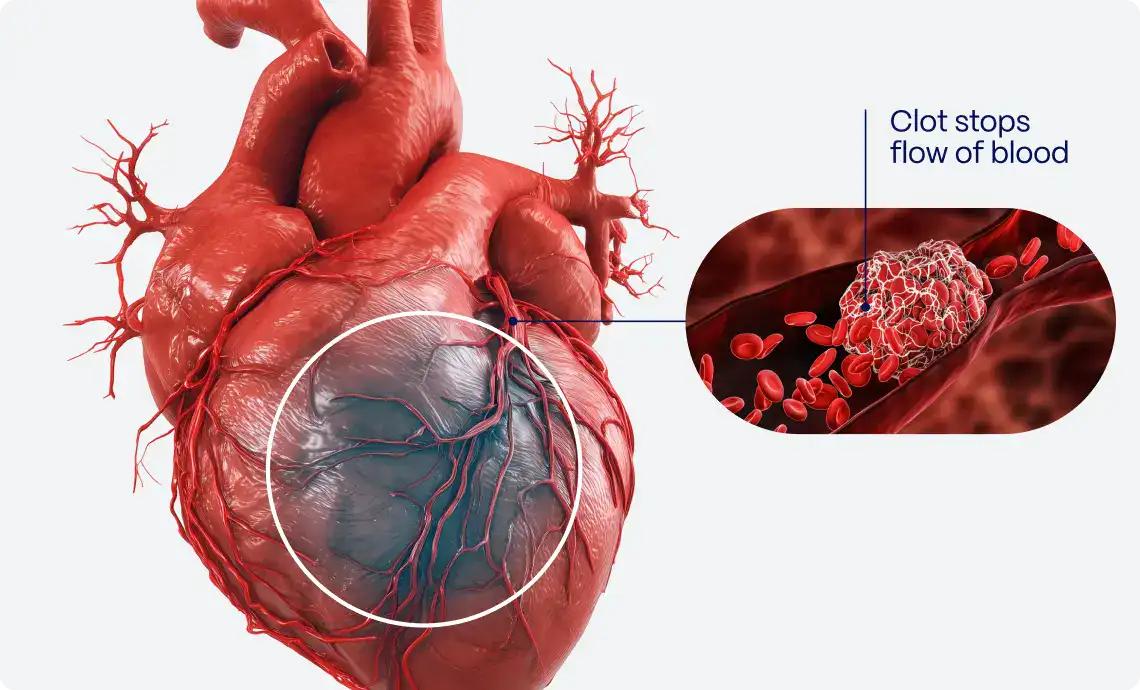
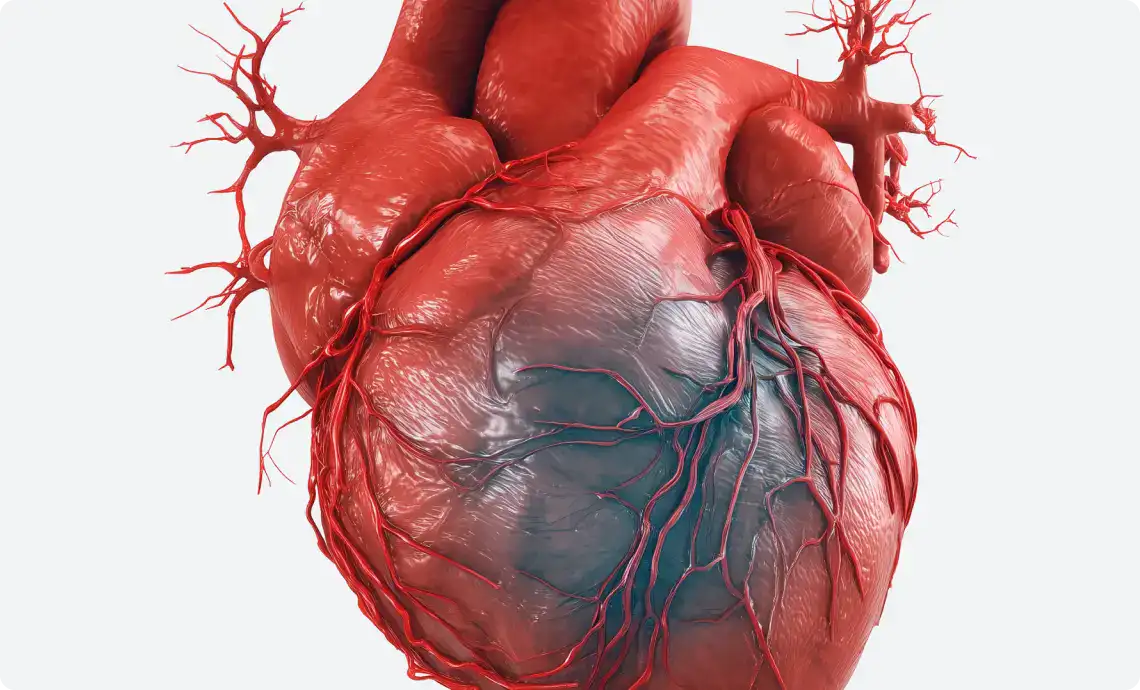
Contrary to popular belief, a heart attacks isn’t a blockage inside of the heart. A heart attack is a blockage of the coronary arteries supplying the heart muscle with oxygenated blood.

So let’s assume you get a blood clot here — it blocks the blood flow downstream, meaning the heart muscle doesn’t get oxygenated blood and heart tissue downstream starts to die.

Clinical Solution​

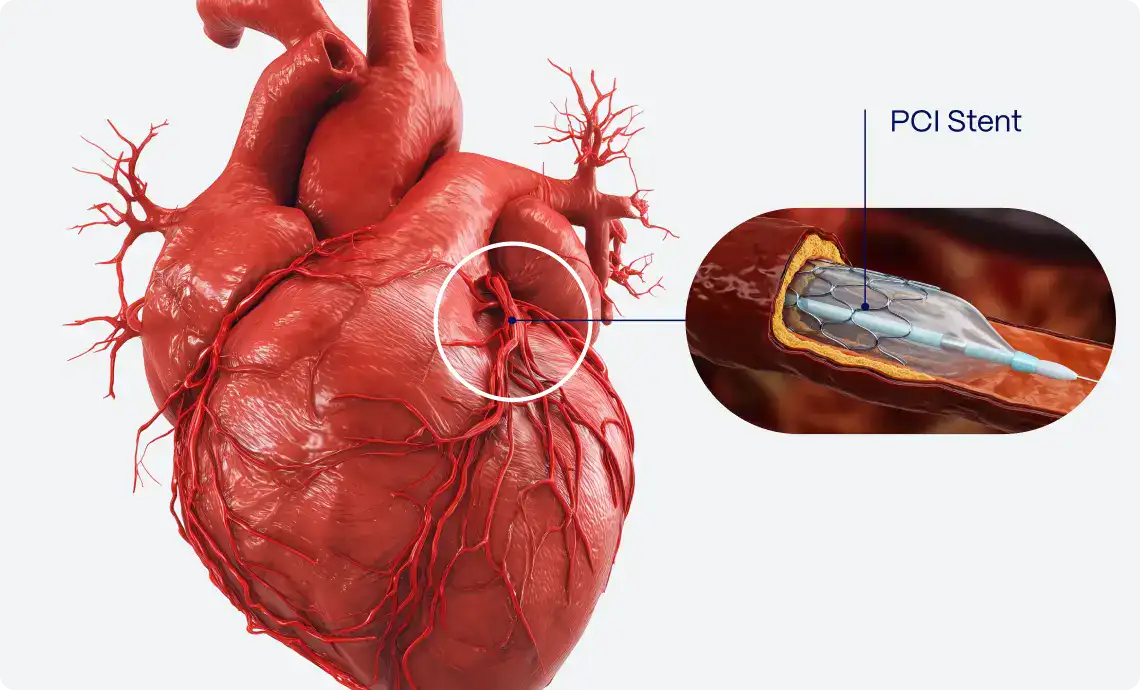
The way to fix it is relatively simple – doctors put in a stent that opens up the artery and renews blood flow. The latest clinical practice guidelines recommend that this “stenting” happens within 90 minutes from symptom onset.

If you don’t, even if you put in the stent in later, the heart tissue downstream has already been permanently damaged, which reduces the heart’s ability to pump blood. This is the leading cause of heart failure and increases 1-year mortality by two-fold.

Time is muscle.

You have just 90 minutes to diagnose the patient, bring them to the hospital and put in the stent, otherwise there is permanent damage. So problem is, that 1 in 2 heart attacks get initially misdiagnosed at the first point of contact.

Discover the future of medical work with us.

Lorem ipsum dolor sit amet, consectetur adipiscing elit. Ut elit tellus, luctus nec ullamcorper mattis, pulvinar dapibus leo.