
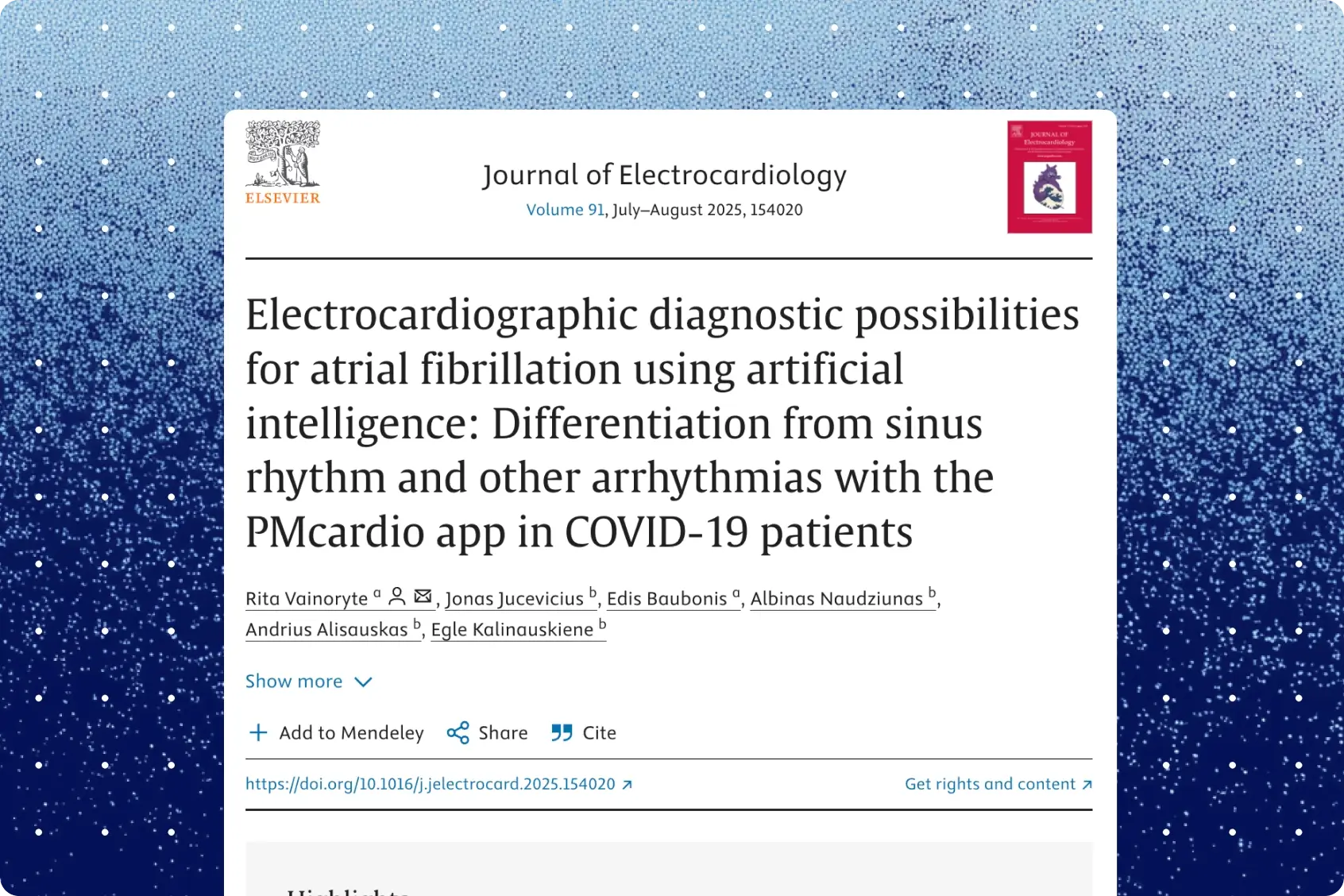
Electrocardiographic Diagnostic Possibilities for Atrial Fibrillation Using Artificial Intelligence: Differentiation from Sinus Rhythm and Other Arrhythmias with the Pmcardio App in Covid-19 Patients
Overview
This study evaluated how effectively artificial intelligence can detect atrial fibrillation (AF) in COVID-19 patients using ECG analysis. Researchers compared the PMcardio AI application’s performance with that of cardiologists and infectious disease specialists. Among 116 hospitalized COVID-19 patients, PMcardio achieved perfect diagnostic accuracy (sensitivity and specificity of 1.00) for AF detection, matching cardiologists and surpassing infectious disease specialists. The AI’s performance remained consistent across confidence levels, and its severity assessments correlated significantly with rhythm findings. These results highlight AI’s potential to improve arrhythmia detection, streamline care, and reduce unnecessary in-person evaluations during infectious disease outbreaks.
Key findings
- 1.00 sensitivity and specificity for AF in 116 COVID-19 patients.
- Matched cardiologists and surpassed infectious-disease specialists.
- Severity assessments correlated significantly with rhythm findings.
Published in: Journal of Electrocardiology
Published on: 10 May 2025
Background
Artificial intelligence (AI) has shown potential in enhancing ECG analysis, but its accuracy in detecting atrial fibrillation (AF) in COVID-19 patients remains unstudied. Given the increased risk of arrhythmias and thromboembolic events in this population, AI could aid in timely correct diagnosis, reduce unnecessary consultations, tests, and minimize infection spread. This study evaluated the diagnostic performance of the AI-based PMcardio application in detecting AF in COVID-19 patients.
Methods
The study analyzed 116 hospitalized COVID-19 consecutive patients using paper-based medical records, with a particular focus on ECGs. The presence and type of arrhythmias were determined by an experienced cardiologist and compared with assessments by the infectious disease specialists collected from patient medical records and the PMcardio application.
Results
The mean patient age was 63.28 (14.980) years. The PMcardio AI application demonstrated perfect diagnostic performance, achieving a sensitivity and specificity of 1.00 for AF detection compared to cardiologist’s evaluations. Infectious disease specialists showed lower sensitivity (0.85) but retained high specificity (0.97). No significant association was found between the AI confidence score and diagnostic accuracy (p = 0.660), indicating consistent performance across confidence levels. Additionally, the AI’s severity classification correlated significantly with rhythm diagnoses (p < 0.001).
Conclusion
AI-powered ECG analysis using PMcardio highly accurately detected AF in COVID-19 patients, outperforming infectious disease specialists and matching cardiologist’s accuracy. The integration of AI in clinical practice may enhance arrhythmia detection and streamline diagnostic workflows, particularly in resource-limited and infectious disease settings.
Share this article



About PMcardio
PMcardio is the market leader in AI-powered diagnostics, addressing the world’s leading cause of death – cardiovascular diseases. The innovative clinical assistant empowers healthcare professionals to detect up to 40 cardiovascular diseases. In the form of a smartphone application, the certified Class IIb medical device interprets any 12-lead ECG image in under 5 seconds to provide accurate diagnoses and individualized treatment recommendations tailored to each patient.

About Powerful Medical
Powerful Medical leads one of the most important shifts in modern medicine by augmenting human-made clinical decisions with artificial intelligence. Our primary focus is on cardiovascular diseases, the world’s leading cause of death.
Established in 2017, Powerful Medical has embarked on a mission to revolutionize the diagnosis and treatment of cardiovascular diseases. We are a medical company backed by 28 world-class cardiologists and led by our expert Scientific Board with decades of experience in daily patient care, clinical research, and medical devices. The results of our research are implemented, developed, certified, and brought to market by our 50+ strong interdisciplinary team of physicians, data scientists, AI experts, software engineers, regulatory specialists, and commercial teams.