
Artificial Intelligence-Assisted, ECG-Based Triage of Patients With Chest Pain to Immediate Invasive Treatment
Overview
Rapid identification of acute coronary occlusion (ACO) is critical in chest pain patients, yet conventional STEMI criteria miss occlusion in many NSTEMI cases, delaying life-saving invasive treatment. This retrospective study tested whether a deep learning ECG AI model could improve ACO detection in an unselected cohort of more than 4,000 consecutive patients from a German chest pain unit. Each 12-lead ECG was assessed using both standard STEMI criteria and the AI model, with ACO independently adjudicated by a blinded physician. The AI model clearly outperformed STEMI criteria, identifying 73 of 104 ACO cases versus 30 (area under the curve 0.958 vs. 0.589), with fewer false positives. The findings suggest AI-assisted ECG interpretation can detect subtle ischemic changes beyond established criteria and support faster triage of NSTE-ACO patients to immediate invasive care.
Key findings
- Retrospective cohort of 4,000+ consecutive German chest-pain patients.
- AI identified 73 of 104 acute coronary occlusions vs 30 for STEMI criteria.
- AUC 0.958 vs 0.589, with fewer false positives.
Published in: Deutsches Ärzteblatt International
Published on: 01 December 2025
Background
Timely triage is crucial in suspected acute myocardial infarction (AMI). Although electrocardiography (ECG) enables early identification of ST-segment elevation myocardial infarction (STEMI) or its equivalents and can facilitate immediate invasive management, the conventional STEMI criteria lack sensitivity in detecting acute coronary occlusion (ACO). Around every fifth to every third patient with confirmed non-ST-segment elevation myocardial infarction (NSTEMI) has ACO, which is missed by conventional STEMI criteria, resulting in the danger of delayed invasive management. Artificial intelligence (AI)-based analysis of a 12-lead ECG may improve early detection of ACO, potentially minimizing diagnostic delays. The present study investigated machine-learning-based AI ECG model predictions for the detection of ACO in an unselected chest pain unit (CPU) cohort, in the context of management in accordance with the European Society of Cardiology (ESC) guidelines.
Methods
All consecutive chest pain patients with available ECG who presented to a CPU over a 32-month period were eligible for this retrospective registry analysis. The study was approved by the ethics committee of the University of Cologne (23-1280-retro).
For each patient, a single 12-lead ECG was analyzed retrospectively, provided it was available in both manually and machine-readable formats. The ECGs were analyzed in two ways:
- By a trained physician applying standard age-, sex- and lead-adjusted STEMI criteria
- By a previously developed automated deep learning AI model trained to detect ischemic patterns beyond the conventional STEMI criteria
The AI model’s functionality, development, and internal validation with respect to occlusion myocardial infarctions have been described. In brief, the AI model relies on a deep neuronal network architecture. Stepwise analysis comprises lead-specific feature extraction and subsequent classification of these features.
In contrast to the previous analysis, active ACO was the investigated outcome in this external validation. The outcome was externally adjudicated by an independent physician (H.P.M.) who was blinded to the AI model’s prediction. He followed a holistic approach, considering angiographic findings, biomarker kinetics, and echocardiographic reports. Patients ruled out according to the 0/1 h high-sensitivity cardiac troponin T (hs-cTnT) ESC algorithm were automatically defined as ACO-negative.
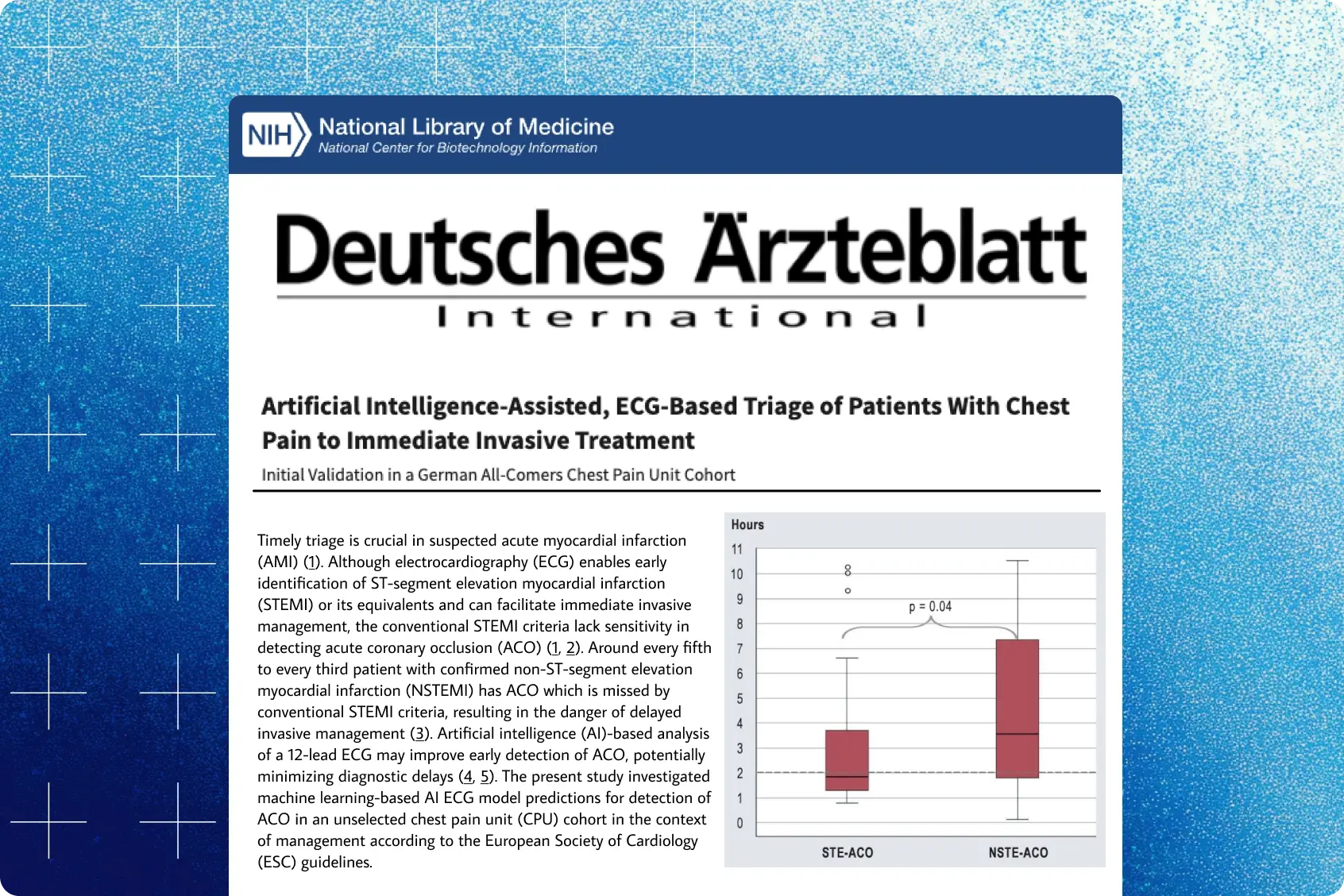
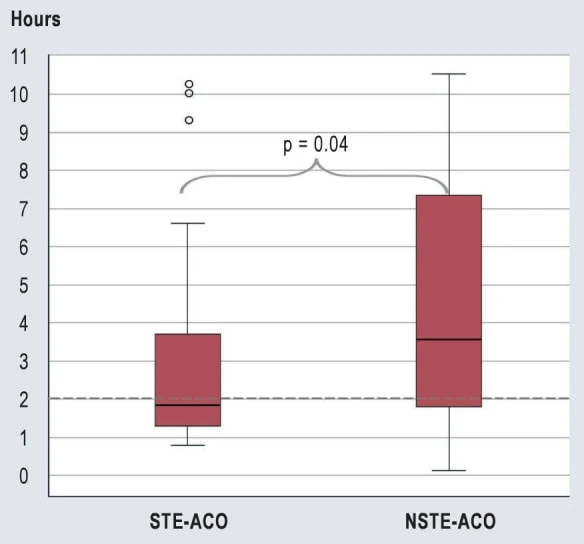
The model gives the probability of ACO on a continuous numerical range from 0.00 to 1.00, with a threshold of 0.50 for positive results previously calibrated for unselected chest pain patients. The diagnostic accuracy of the AI model prediction was assessed by means of receiver operating characteristic (ROC) analysis. The diagnostic performance was compared with STEMI criteria. For further analysis of system-related delays, patients with ACO were categorized (ACO with ST-segment elevation [STE-ACO], ACO without ST-segment elevation [NSTE-ACO]). The ECG-to-balloon time was used to quantify system-related delays.
Results
Overall, 4104 patients were eligible. Of these, 19 were excluded due to non-readable ECGs. The mean age was 54.5 (± 19.0) years, and 62.8% were male. In the CPU, 73% were assigned to the rule-out group on the basis of the 0/1 h hs-cTnT ESC algorithm, 20% were referred for coronary angiography, and 7% were potential rule-in patients, but were managed non-invasively in an individualized treatment strategy. Overall, 85.3% had a non-ischemic cause of chest pain and 14.7% had acute coronary syndrome. The prevalence of ACO was 2.5% (n = 104).
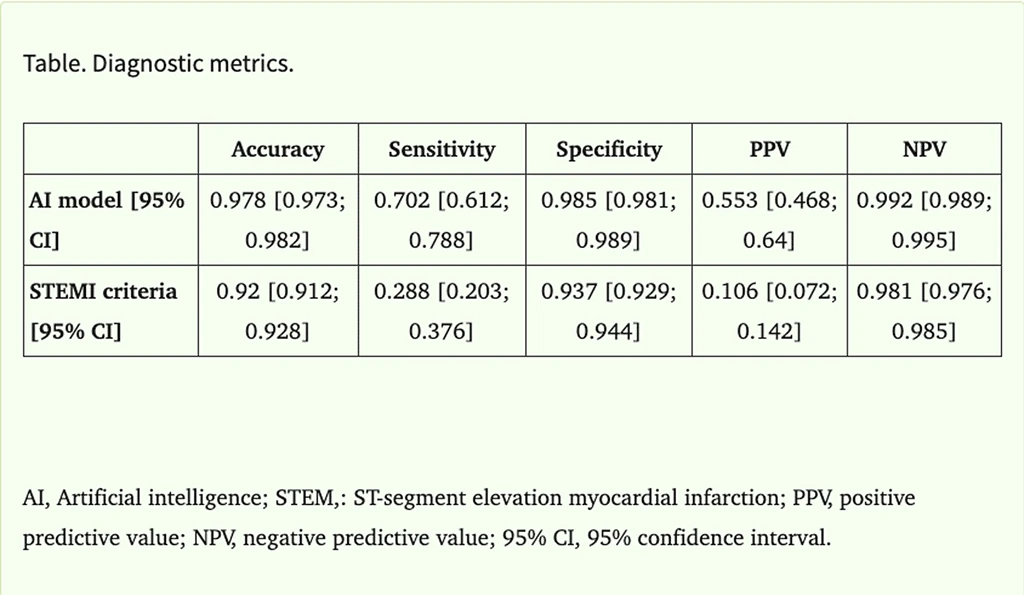
The AI ECG model identified 73 of 104 ACO cases, compared with 30 by the STEMI criteria. ROC analysis showed an area under the curve of 0.958 for the AI model, compared with 0.589 for the STEMI criteria. In the rule-out group (n = 2999), the AI ECG model showed fewer false positives (0.7% vs. 5%) and fewer potentially avoidable angiographies (20 vs. 150) than the STEMI criteria. A relevant system-related delay was found for NSTE-ACO: the median ECG-to-balloon interval was 3 : 33 h (interquartile range [IQR] 5 : 44) in NSTE-ACO and 1 : 51 h (IQR 2 : 31) in STE-ACO. Only 28% of NSTE-ACO were revascularized within 2 h after ECG recording. The in-hospital mortality rate for the whole cohort was 0.7%. Among ACO patients, in-hospital mortality was 8.1% for NSTE-ACO and 10% for STE-ACO.
Conclusion
This study shows that AI-assisted detection of active ACO from a single ECG outperforms conventional STEMI criteria in an all-comer CPU cohort, enabling faster triage of patients with NSTE-ACO to immediate invasive treatment.
Share this article



About PMcardio
PMcardio is the market leader in AI-powered diagnostics, addressing the world’s leading cause of death – cardiovascular diseases. The innovative clinical assistant empowers healthcare professionals to detect up to 40 cardiovascular diseases. In the form of a smartphone application, the certified Class IIb medical device interprets any 12-lead ECG image in under 5 seconds to provide accurate diagnoses and individualized treatment recommendations tailored to each patient.

About Powerful Medical
Powerful Medical leads one of the most important shifts in modern medicine by augmenting human-made clinical decisions with artificial intelligence. Our primary focus is on cardiovascular diseases, the world’s leading cause of death.
Established in 2017, Powerful Medical has embarked on a mission to revolutionize the diagnosis and treatment of cardiovascular diseases. We are a medical company backed by 28 world-class cardiologists and led by our expert Scientific Board with decades of experience in daily patient care, clinical research, and medical devices. The results of our research are implemented, developed, certified, and brought to market by our 50+ strong interdisciplinary team of physicians, data scientists, AI experts, software engineers, regulatory specialists, and commercial teams.