

25–40% of cath lab activations are false positives
What this means in practice
To achieve rapid door-to-balloon times, many STEMI systems prioritize speed and sensitivity over specificity. EMS and emergency department clinicians are often empowered to activate the cath lab immediately, frequently before cardiology review.
The unavoidable tradeoff is over-triage.
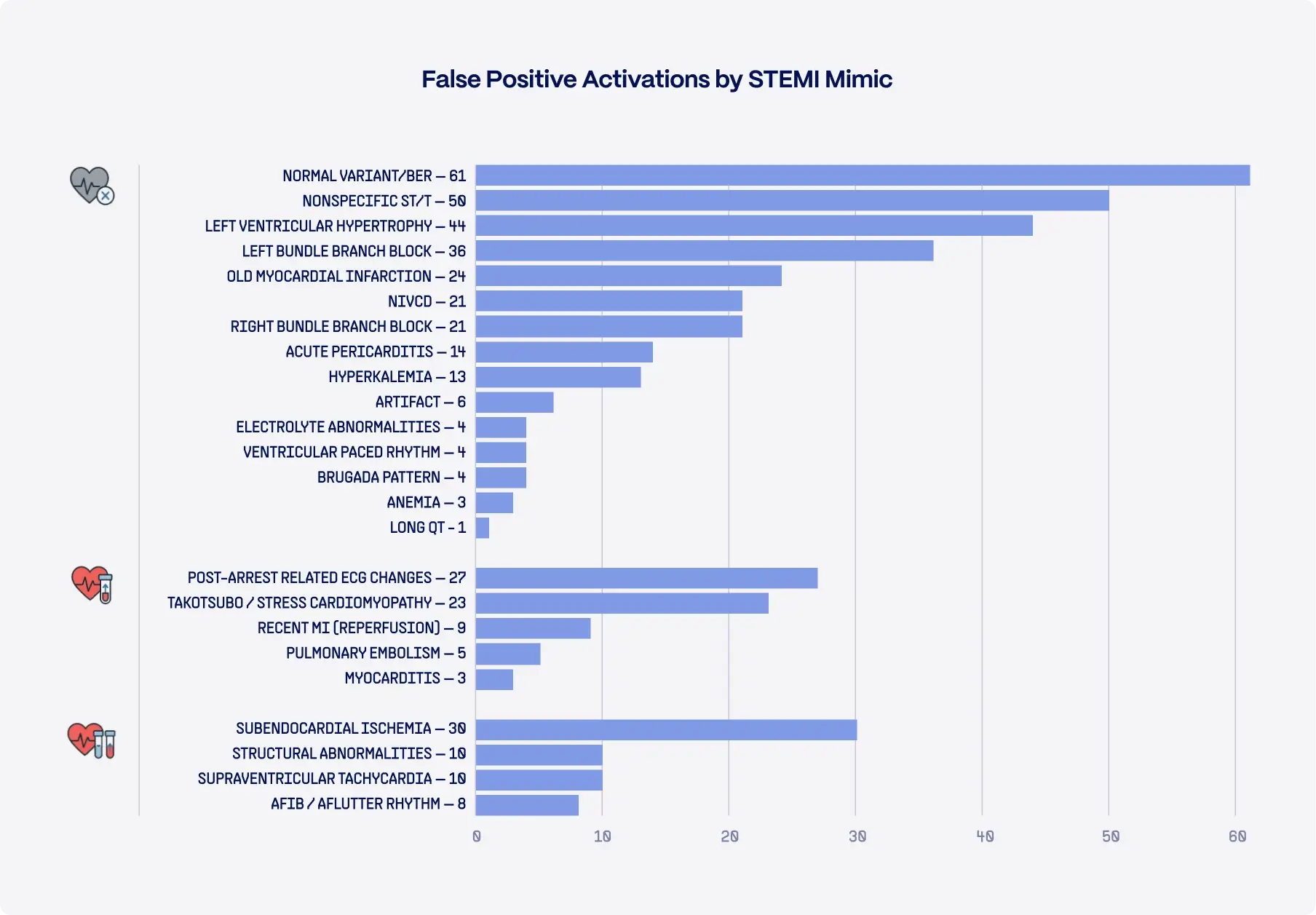
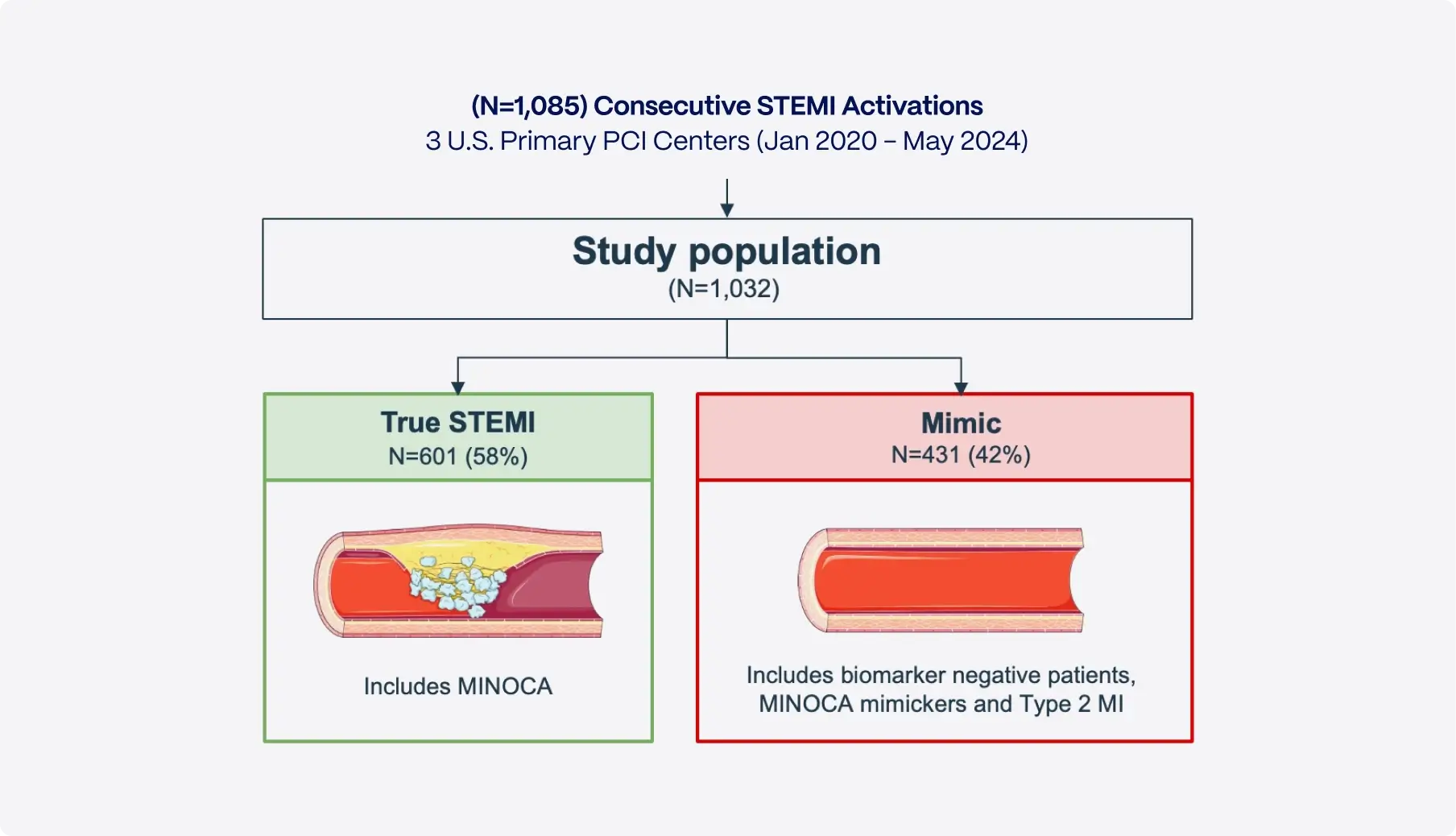
Across large registries and real-world cohorts, 15–30% of STEMI activations result in no culprit coronary lesion [1], and when activations that are later canceled by cardiologists are included, false-positive rates approach 25–40%. These are not rare edge cases, they represent a routine operational burden in contemporary STEMI systems.
Why this happens
STEMI activation is intentionally designed to be “fast and sensitive”, but several ECG and clinical patterns commonly mimic STEMI and trigger false alarms, especially at first medical contact:
While effective for many patients, this approach has important limitations:
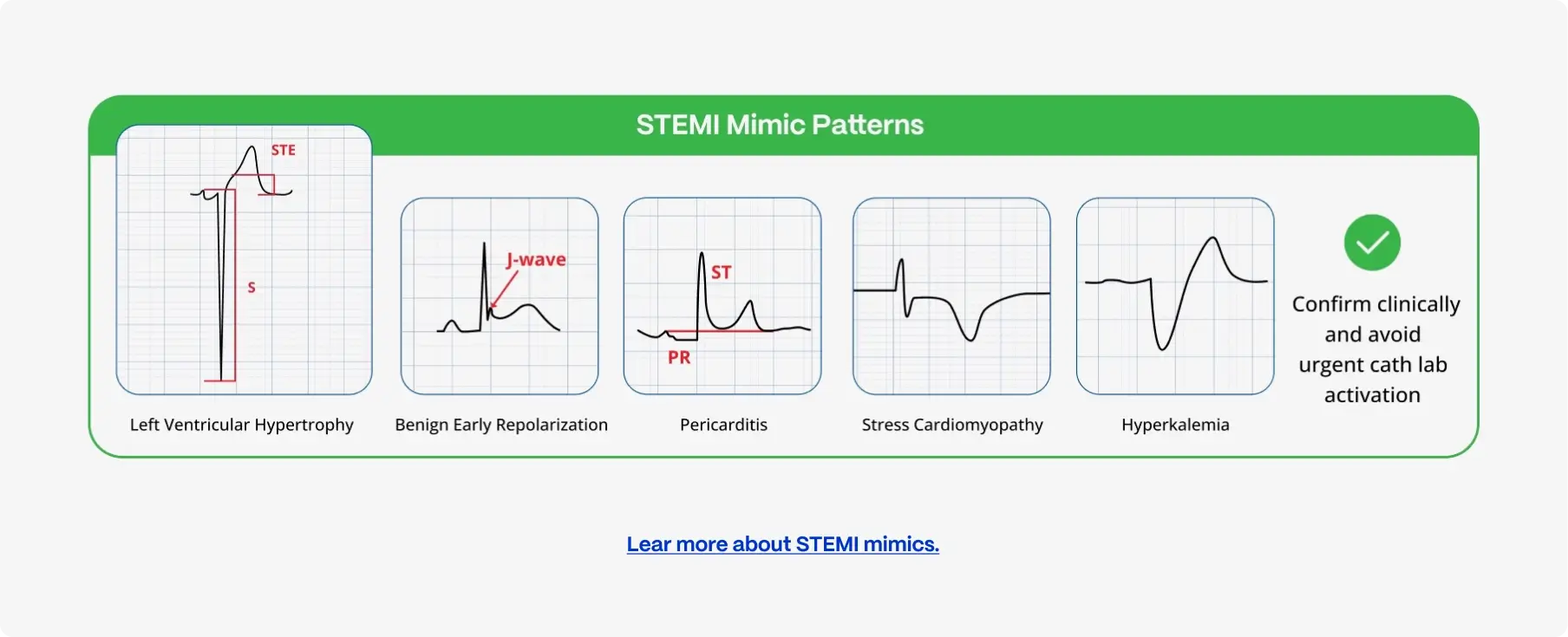
- STEMI mimics are common: Benign early repolarization, LVH with strain, LBBB or paced rhythms, pericarditis or myocarditis, electrolyte disturbances, and tachyarrhythmias frequently produce ST-segment patterns that resemble STEMI.
- Prehospital ECGs are noisier and less contextual: Motion artifact, lead misplacement, missing prior ECGs, and limited clinical history increase diagnostic uncertainty.
- Interpretation variability under time pressure: ECG interpretation at the point of first contact varies widely by experience, fatigue, and workload, particularly without cardiology support.
As a result, many activations reflect diagnostic ambiguity rather than true coronary occlusion.
Clinical consequences and system-level consequences
False-positive activations carry a real and recurring cost, even when no PCI is performed:
- Resource utilization and staff fatigue: False activations consume limited cath lab capacity and repeatedly mobilize on-call teams, particularly after-hours.
- Patient impact: Even when angiography is ultimately “negative,” patients are exposed to invasive procedures, contrast load, radiation, downstream testing, and prolonged ED or ICU stays.
- Direct activation costs: On-call staff mobilization, cath lab setup, and procedural readiness are estimated to cost $3,000–$6,000 per activation in many systems.
- [1] Larson DM, Menssen KM, Sharkey SW, Duval S, Schwartz RS, Harris J, Meland JT, Unger BT, Henry TD. "False-positive" cardiac catheterization laboratory activation among patients with suspected ST-segment elevation myocardial infarction. JAMA. 2007 Dec 19;298(23):2754-60. doi: 10.1001/jama.298.23.2754. PMID: 18165668.