
Powerful Medical Receives €40 Million IPCEI Grant — read the full story

Powerful Medical
5. January 2023

Which ECG device is the right one for your patients? Comparing 12-Lead ECG with Ambulatory ECG Holter and Handheld ECG devices
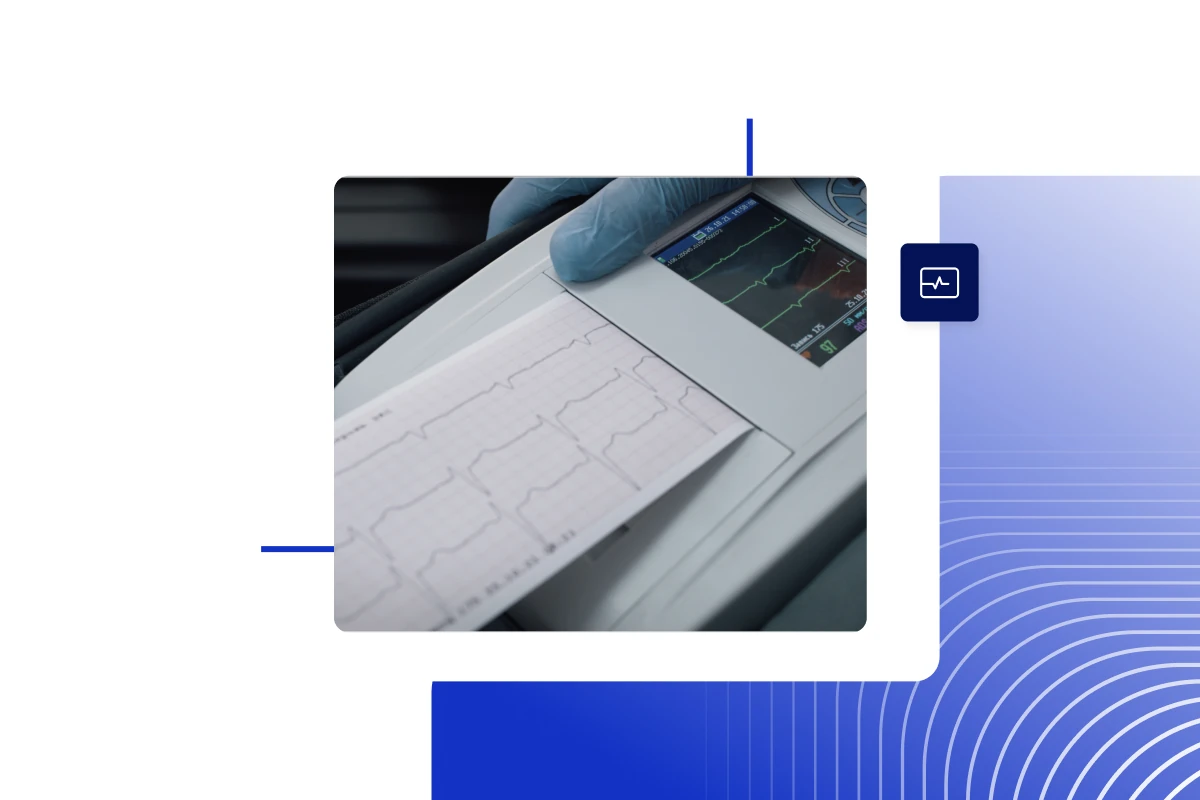
As global statistics show, cardiovascular diseases remain a leading cause of premature mortality [1], with an alarming toll of approximately 17.9 million lives each year [2]. ECG (electrocardiogram) devices play a crucial role in the diagnosis and screening of various heart diseases as well as the prevention of cardiac fatalities. 

While the 12-lead ECG device remains a standard, innovations in the healthcare industry have made it possible to effectively record the heart’s electrical activity also via handheld ECG devices and Holter monitors. 

This article explains in more detail how Ambulatory ECG Holters and Handheld ECG devices compare to the 12-lead ECG to help you choose the best option for your patients.

Our CMO, Robert Herman, MD, discusses the future roadmap for leveraging AI in the ECG interpretation landscape on the Mayo Clinic podcast.

Ambulatory ECG Holter v. 12-lead ECG

ECG Holters allow the continuous recording of three or more leads for 24-48 hours, allowing physicians to monitor heart activity outside the clinical setting. These ambulatory monitors are useful for certain arrhythmias, which can be difficult to capture using conventional ECG devices. 

However, ECG Holters have certain limitations. For one, the results aren’t as readily available as with a standard 12-lead ECG device since the device’s electrodes must be attached to the patient’s skin for at least 24 hours. This fact brings with it another nuisance – this time for patients who may not tolerate wearing the device on their body for such a long period of time. Also, Holter monitors require a certain level of specialization in using and interpreting the results, further limiting their access to patients who might need them [3]

Unlike conventional ECGs, Holter monitoring requires close collaboration between patients and physicians since the whole process of collecting patients’ cardiac data is conducted outside the clinical setting [4]. Patients are usually instructed to keep a diary of their symptoms to help physicians correlate any abnormalities in heart activity with their symptoms. Often, though, patients fail to comply with these instructions, further limiting the diagnostic abilities of ECG Holters [5].

Which ECG device is the right one for your patients? Comparing 12-Lead ECG with Ambulatory ECG Holter and Handheld ECG devices

Get PMcardio Now

Join a future where cardiac care is smarter, quicker, and within everyone’s reach. Sign up today and enjoy PMcardio with 5 FREE ECGs/month – no credit card needed.

Portable ECG monitor vs. 12-lead ECG

Handheld ECG monitors are portable devices for at-home heart monitoring that capture electrical impulses from the heart via finger or chest electrodes. Among other things, these devices are useful for detecting episodic rhythm disorders

Its ability to monitor heart activity repeatedly at home and thus detect episodic heart failures is where 12-lead ECG falls short, it being able to capture the heart’s electrical activity during a doctor’s visit only.

Comparing the two, however, may be slightly inadequate. While 12-lead ECGs are readily available as a medical-grade diagnostic tool, crucial for detecting and diagnosing cardiovascular conditions, such as heart failure and arrhythmias, handheld ECG monitors mainly serve as screening tools, helping detect disease in a healthy population with no symptoms.  

This is what keeps portable ECG devices from wider usage. Since healthy people rarely purchase these devices for at-home use, proper public education is necessary to increase awareness, especially in at-risk populations that have yet to display signs and symptoms of heart disease.

Another thing to consider is that certain heart conditions, such as arrhythmia, may go undetected by the portable ECGs, unlike 12-lead ECGs. This is especially the case with single-lead handheld devices, which have a relatively high potential for false-negative results, which could lead to a diagnostic error or overlooking a pathology [6].

In terms of research and publicly available literature, there is still a shortage of information on the diagnostic accuracy, reproducibility, or utility of portable ECG devices. This could be due to the early-stage development of such devices and the lack of regulatory measures mandating robust studies before the launch of these devices [7].

Which ECG device is the right one for your patients? Comparing 12-Lead ECG with Ambulatory ECG Holter and Handheld ECG devices

Read your next ECG with AI

Be part of a future where expert ECG interpretation is smarter, faster, and more accessible. Sign up now and enjoy PMcardio with 5 FREE ECGs/month – no credit card needed.

High clinical utility of 12-lead ECGs

The 12-lead ECGs are still the gold standard in electrocardiography. That is mainly due to their medical-grade diagnostic accuracy and increasing accessibility in the healthcare landscape. Around 8 in 10 GPs in the EU currently have access to 12-lead ECGs, making it one of the most accessible and vital devices for detecting and diagnosing heart conditions. 

More and more research is being dedicated to 12-lead ECGs due to the vast amount of digitally-available data over the last two decades. The robust research efforts delegated to 12-lead ECGs will continue to progress and develop their clinical utility and potential. They are still far from being replaced as a non-invasive and medical-grade diagnostic tool, despite them requiring considerable expertise to interpret the collected data.

This is where modern machine learning and AI tools come into play. 

Powerful Medical’s PMcardio is an AI-driven clinical assistant that helps healthcare professionals interpret and digitize 12-lead ECGs to optimize the detection and treatment of cardiovascular conditions. 

Our AI model has been trained on millions of previous cases. It can quickly diagnose 44 different heart conditions and 9 measurements based on ECGs with the accuracy of an experienced cardiologist.

You can incorporate PMcardio into any existing hospital infrastructure as it is available as an easy, user-friendly smartphone application

From diagnosing heart conditions and digitizing ECG records to providing treatment recommendations based on the latest guidelines—PMcardio enhances how you deliver patient care via ground-breaking AI technology. 

Want to interpret 12-lead ECGs faster and with higher confidence?

Then get PMcardio! After taking a photo of an ECG with your phone, PMcardio will digitize it and interpret the tracing in seconds. The app also includes treatment and patient management recommendations – adherent to the latest medical practice guidelines.

Powerful Medical

Powerful Medical leads one of the most important shifts in modern medicine by augmenting human-made clinical decisions with artificial intelligence. Our primary focus is on cardiovascular diseases, the world’s leading cause of death.
About PMcardio:

PMcardio is a CE-certified AI that reads ECGs and offers a complex assessment of 49 cardiac conditions. Clinically validated in 15+ studies and trusted by over 100,000 clinicians, it delivers rapid, expert‑level interpretations, empowering emergency physicians, GPs, nurses, paramedics, and cardiologists to act with confidence at the point of care. Available for Individuals and Organizations.

Share this article

Don't miss these

Powerful Medical team receiving the MedTech Innovator 2025 Mid-Stage Grand Prize award on stage, holding a large winner’s check.

Powerful Medical Wins MedTech Innovator 2025

Powerful Medical has been named MedTech Innovator 2025, winning MTI’s Mid-Stage Grand Finals—top honor from the world’s largest medtech accelerator. The award recognizes PMcardio and its FDA Breakthrough-designated Queen of Hearts™ AI ECG technology, which doubles sensitivity for detecting severe heart attacks and significantly cuts ECG-to-balloon time in large clinical trials.

PMcardio Reports Positive RCT Results and Late-Breaking Clinical Science for STEMI Detection

PMcardio’s AI-powered ECG technology delivers breakthrough results at TCT 2025—improving heart attack detection, reducing false activations, and enabling faster treatment across major clinical trials, including the landmark DIFOCCULT-3 RCT.

Join over 100,000 healthcare professionals who are already taking advantage of AI

Governance, customization & configuration

Align the platform to your protocols — without a custom software project.

Configure escalation thresholds, roles, and reporting to match local pathway rules — while maintaining system-wide governance and consistency.

  • Configurable triggers, roles, and escalation workflows
  • Custom dashboards and views aligned to leadership needs
  • Controlled expansion to additional pathways over time

Outcomes, QA & performance intelligence​

Measure what matters — across every pathway, every site.

Turn pathway execution into dashboards and reporting that help leadership reduce variation, optimize time-to-treatment, and demonstrate value across every deployed suite.

  • Cross-site, cross-pathway, and team-level benchmarking
  • Time-to-treatment and pathway quality tracking
  • QA workflows, audit trails, and leadership reporting
  • Registry-aligned reporting support (NCDR Chest Pain-MI, AHA GWTG, and more)

Escalation & care coordination

Real-time routing that matches how your system actually runs.

Route critical cases to the right team with role-based notifications, escalation logic, and shared case context — across EMS, ED, cardiology, cath lab, and inpatient care.

  • Role-based alerting and escalation across departments and sites
  • Shared case context so receiving teams have what they need before the patient arrives
  • Integration with existing communication and alerting tools

AI-powered decision support

Clinically validated AI that spans the cardiac care journey.

Run multiple AI models on every recording — acute detection, screening, procedural quantification — with interpretable outputs and case-level explainability.

  • Queen of Hearts™ for STEMI/OMI detection
  • LVsense™ for reduced ejection fraction
  • Culprit Artery Prediction for pre-cath planning
  • Core AI for comprehensive rhythm and conduction analysis
  • Expanding model portfolio across Echo Screening, Remote Monitoring, and Angio Suites

Interoperability & deployment

Connect across your existing systems — without replacing them.

Ingest pathway-critical inputs from across your network and IT landscape, and deliver results where teams already work. Built for system-wide rollout with enterprise deployment patterns.

  • Connect to ECG devices, angiographic systems, and ambulatory monitors across sites
  • Launch PMcardio from the EHR / CVIS with secure links and SSO
  • Send results back to clinical systems where care is documented

All Supported ECG Findings

Rhythms
Sinus bradycardia • Sinus rhythm • Sinus tachycardia • Paced rhythm • Atrial fibrillation
Atrial fibrillation with rapid ventricular response • Atrial fibrillation with slow ventricular response • Atrial flutter • Atrial flutter with rapid ventricular response • Atrial flutter with slow ventricular response • Supraventricular tachycardia • Suspected junctional rhythm • Suspected junctional bradycardia • Suspected accelerated junctional rhythm • Wide QRS rhythm • Idioventricular rhythm • Wide QRS tachycardia

Myocardial Infarctions
  • STEMI
  • STEMI
    Equivalent
Detects occlusive myocardial infarctions (OMIs) even without ST elevation (i.e. posterior STEMI, hyperacute T-waves, etc.). Negative for STEMI mimics (i.e. early repolarization, LVH, etc.)
  • High-Risk NSTEMI
    Represents a type 1 myocardial infarction caused by a transiently recanalized coronary occlusion—classically seen in patterns such as Wellens type A or B due to subtotal LAD obstruction, but possible in any infarct-related territory.
  • Culprit Detection
    AI-predicted likelihood scores for LAD, LCx, and RCA with 3D heart visualization highlighting the predicted culprit artery.

Conduction Abnormalities (Heart Blocks
1st degree AV block • 2nd degree AV block, type Wenckebach • Higher degree AV block • Complete right bundle branch block • Incomplete right bundle branch block • Complete left bundle branch block • Incomplete left bundle branch block • Nonspecific intraventricular conduction delay • Left anterior fascicular block • Left posterior fascicular block • Bifascicular block (RBBB + LAFB) • Bifascicular block (RBBB + LPFB) • Trifascicular block (RBBB + LAFB + AVBLOCK1) • Trifascicular block (RBBB + LPFB + AVBLOCK1)

LVEF
Reduced LVEF (≤40%) • Mildly reduced LVEF (41 – 49%) • No signs of reduced LVEF (≥50%)

Axis
Left cardiac axis deviation • Right cardiac axis deviation • Extreme cardiac axis deviation • Normal axis

Measurements
Heart rate • P wave • PR interval • QRS duration • QT interval • Corrected QT interval (Framingham formula) • RR interval • PP interval • ST elevations

Other Supported Diagnoses
Suspected long QT syndrome • Suspected short QT syndrome • Suspected atrial enlargement • Suspected ventricular hypertrophy • Premature complexes

Dr. Tom De Potter, MD

Cardiologist at the Cardiac Center Aalst

Cardiologist specializing in Pacemaker Device Therapy and Electrophysiology. Leads the electrophysiology unit at the Heart Center in Aalst, holds an executive board position at the European Heart Academy, and serves as EHRA scientific program committee co-chair.

Dr. Martin Penicka, MD, PhD

Cardiologist at the Cardiac Center Aalst

Cardiologist at the Cardiac Center Aalst since 2009, specializing in non-invasive imaging and valvular disease. Fellow of the European Society of Cardiology (FESC) and the European Association of Cardiovascular Imaging (FEACVI).

Dr. Ward Heggermont, MD, PhD

Co-director at the Cardiovascular Center

Co-director at the Cardiovascular Center of Aalst Hospital, specializing in heart failure. Research focus at the intersection of cardiology, virology, and metabolism.

Prof. Dr. Robert Hatala, PhD

Co-founder and Chief Scientist

Head of the Arrhythmia and Pacing department at the National Institute of Cardiovascular Diseases in Slovakia. More than 150 publications and 10,000 citations. Contributor to ESC clinical practice guidelines and executive editor of the European Heart Journal since 2020.

Arieh Levy

Head of PMcardio for Individuals

Arieh leads the PMcardio for Individuals product at Powerful Medical, guiding its development as a clinical tool for emergency physicians, cardiologists, and primary care physicians. He holds a First Class MEng in Biomedical Engineering from Imperial College London, where he specialised in AI for cardiology, building physics-informed neural networks to model atrial electrical properties, giving him a background that bridges the clinical and technical demands of building a certified AI medical device used at the bedside every day.

Dr. Dave Pearson, MD​

Business Advisor

Academic emergency medicine physician, entrepreneur, investor, and researcher with nearly two decades at Atrium Health, one of US largest health systems. Brings expertise at the intersection of clinical care, healthcare innovation, and strategic leadership.

Prof. Stephen W. Smith, MD

Professor of Emergency Medicine

Faculty physician in Emergency Medicine at Hennepin County Medical Center and Professor of Emergency Medicine at the University of Minnesota. Co-inventor of the OMI paradigm and editor of Dr. Smith’s ECG Blog, the most-visited US-based ECG interpretation blog.

Prof. Emanuele Barbato, MD, PhD

President of EAPCI

Interventional cardiologist specializing in coronary artery disease and coronary physiology. Acting president of the European Association of Percutaneous Cardiovascular Interventions (EAPCI) and contributor to the clinical practice guidelines for STEMI care.

Scott Sharkey, MD

Chief Medical Officer

Chief Medical Officer of the Minneapolis Heart Institute Foundation and practicing cardiologist at Allina Health Minneapolis Heart Institute. Co-founder of the STEMI Midwest consortium and Takotsubo cardiomyopathy research program and a widely published clinical investigator in STEMI care.

Prof. Dr. Leor Perl, MD

Director of Cardiac Catheterization Institute

Director of Complex Cardiac Interventions and Chief Innovation Officer at Rabin Medical Center. Graduate of the Stanford Biodesign Program.

Suzanne J. Baron, MD, MSc

Director of Interventional Cardiology Research

Director of Interventional Cardiology Research at Massachusetts General Hospital. Holds a Master’s degree in health economics from Harvard School of Public Health. Expert in cardiovascular device impact on healthcare costs and patient-reported outcomes.

Prof. Marco Valgimigli, MD

Deputy Chief Cardiocentro Ticino Institute

Head of Cardiology at Cardiocentro Ticino and Principal Investigator of the TITAN-OMI randomized controlled trial. His research has shaped both European and US clinical practice guidelines on coronary stents, antithrombotic therapy, and vascular access.

Timothy D. Henry, MD

Medical Director of The Carl and Edyth Lindner Center

Leading expert in interventional cardiology and STEMI treatment. Co-founder and principal investigator of the Midwest STEMI Consortium, a registry of more than 20,000 consecutive STEMI activations. Presenting author for the TCT 2025 Late-Breaking Clinical Science on Queen of Hearts.

Matus Horvath

Head of People

Matus leads hiring strategy and culture at Powerful Medical. He previously ran the People Team at Slido, the Slovak SaaS startup later acquired by Cisco — an experience that informs how he builds a high-performing, values-driven team through rapid scaling.

Dr. Timea Kisova, MD

Clinical Research Lead

Timea leads Powerful Medical’s global external validation studies, including the multi-country AI ECG TIMI Study. With a background in biomedical sciences and a medical degree from Barts and The London School of Medicine and Dentistry, she brings the clinical discipline required to generate the prospective, real-world evidence behind every PMcardio module.

Dr. Anthony Demolder, MD, PhD

HF Pathway Lead

Research physician with a PhD on arrhythmias in heritable thoracic aortic disease. He has led international studies at the intersection of cardiology and AI — including earlier work on atrial fibrillation at AZ Sint-Jan Brugge — and now drives Powerful Medical’s heart failure pathway and LVsense™ AI model development.

Dr. Pendell Meyers, MD

ACS Pathway Lead

Emergency medicine physician, prolific educator, and Co-Editor of Dr. Smith’s ECG Blog. He is one of the leading voices behind the Occlusion Myocardial Infarction (OMI) paradigm, the clinical framework that reshaped how heart attacks are identified from the ECG — and which sits at the core of the Queen of Hearts™ model.

Adam Dej

Head of PMcardio for Organizations Engineering

Adam leads engineering for PMcardio for Organizations at Powerful Medical, driving platform architecture, backend systems, and infrastructure behind one of the company’s key growth products. He began programming at 13, entered professional IT at 17, and studied computer security at Comenius University’s Faculty of Mathematics, Physics and Informatics. Known for technical depth across distributed systems, infrastructure, and security, he builds scalable and resilient software with a sharp focus on customer impact. He also champions responsible use of AI and LLMs as force multipliers for modern engineering teams.

Gabriela Rovder Sklencarova

Head of Infrastructure

Gabriela designs the scalable, secure, distributed systems that keep PMcardio running around the clock for clinicians worldwide. She joined from Google, where she was a senior software engineer building core libraries that kept Google’s services resilient against billions of requests, and holds a BA and MA in Computer Science from the University of Cambridge.

Arezou Azar

US and Global Regulatory

Arezou leads Powerful Medical’s global regulatory strategy across the FDA, EU MDR, and international frameworks. She has been part of nearly every major breakthrough in AI cardiology and is an expert in US and global regulatory strategy, SaMD/digital health launches, with experience at Eko Health, Verily, AliveCor, Cardiologs, and Apple. She specializes in regulatory strategy in high-paced global organizations.

Adam Rafajdus

Head of AI

Adam grew into the Head of AI role from MLOps Engineer over six years at Powerful Medical, bringing deep expertise in deep learning and production-grade system deployment. He leads the team behind the Queen of Hearts™ AI ECG models and was awarded Best Poster at ISCE 2025 for the company’s ECG digitization pipeline.

Mike Wall

VP of Sales

Mike brings more than twenty years at UnitedHealth Group to the table, where he served health plans, employer groups, and public-sector entities as a consultative healthcare sales executive. He combines market intelligence, clinical insight, and financial acumen — the three ingredients needed to bring AI-powered diagnostics into US health systems at scale.

Amani Farid

Head of Strategic Partnerships

Amani leads partnership strategy with a hands-on approach to integration, unlocking long-term value through collaboration and scale. A University of Chicago Law School-trained attorney and former M&A and capital markets associate at two top international law firms, she brings the rare combination of legal precision and commercial execution refined across nearly a decade at Stryker and as VP of Corporate Development at RapidAI — spanning medtech, digital health, and AI-driven diagnostics.

Michal Martonak

Commercial Lead

A mathematician by training, Michal leads commercial strategy, go-to-market, and strategic partnerships with healthcare providers and clinical institutions worldwide. He previously built Powerful Medical’s data and clinical partnerships function, acquiring the large-scale clinical datasets that underpin the company’s certified AI models.

Dr. Jozef Bartunek, MD, PhD

Co-founder and VP Clinical Strategy

Interventional cardiologist and Co-director of the Cardiovascular Center in Aalst, Belgium — one of the world’s leading heart centers. A Fogarty International NIH Fellow at Harvard Medical School and visiting Professor of Medicine at Catholic University Leuven, he has authored more than 240 peer-reviewed publications in heart failure and structural heart disease, and anchors Powerful Medical’s clinical and research strategy.

Simon Rovder

Co-founder and CTO

Simon began his engineering career at Microsoft and holds a Master’s degree in Informatics from the University of Edinburgh. He built and scaled Powerful Medical’s technology organization from the ground up to a team of 20+ engineers, leading the architecture of a CE-certified Class IIb medical device now deployed in hospitals across Europe.

Viktor Jurasek

Co-founder and CPO

Viktor was modding computer games before his teens and has spent the last decade shipping digital products across advertising, finance, and healthcare. As co-founder and CPO, he has led PMcardio’s product and design since the first prototype, setting the bar for how a clinical-grade tool should feel in a physician’s hands — fast, clear, and trustworthy at the point of care.

Felix Bauer

Co-founder and COO

Felix was part of the Hyperloop team that repeatedly competed and won in Elon Musk’s SpaceX Hyperloop Pod Competition. He holds a degree from the Technical University of Munich and brings a rare combination of engineering rigor, regulatory discipline, and operational excellence to the company, spearheading operations, compliance, regulatory, quality management, and global market access since day one.

Dr. Robert Herman, MD, PhD

Co-founder and Chief Medical Officer

Robert is a physician-scientist who served on the Research, Digital and Innovation Committee of the European Society of Cardiology. He bridges medicine and AI, connecting clinicians, researchers, regulators, and trial leaders to translate algorithms into clinical practice. He founded multiple AI ECG models, leads international clinical trials validating them, is a recipient of the Journal of the American College of Cardiology Spencer King Award, and was named to Forbes 30 Under 30 Europe 2024.

Martin Herman

Co-founder and CEO

Martin started coding at 14 and moved to Silicon Valley at 18, founding several companies including a US-based startup before returning to Europe with his brother Robert to build Powerful Medical. He comes from a family of doctors, which shaped his conviction that AI belongs wherever it can genuinely save lives. Forbes 30 Under 30 (Europe 2024).

Heart Attacks are #1 cause of death world-wide and killing about 12 milions people a year.

Clinical Definition of Problem

Contrary to popular belief, a heart attacks isn’t a blockage inside of the heart. A heart attack is a blockage of the coronary arteries supplying the heart muscle with oxygenated blood.

So let’s assume you get a blood clot here — it blocks the blood flow downstream, meaning the heart muscle doesn’t get oxygenated blood and heart tissue downstream starts to die.

Clinical Solution​

The way to fix it is relatively simple – doctors put in a stent that opens up the artery and renews blood flow. The latest clinical practice guidelines recommend that this “stenting” happens within 90 minutes from symptom onset.

If you don’t, even if you put in the stent in later, the heart tissue downstream has already been permanently damaged, which reduces the heart’s ability to pump blood. This is the leading cause of heart failure and increases 1-year mortality by two-fold.

Time is muscle.

You have just 90 minutes to diagnose the patient, bring them to the hospital and put in the stent, otherwise there is permanent damage. So problem is, that 1 in 2 heart attacks get initially misdiagnosed at the first point of contact.

Discover the future of medical work with us.

Lorem ipsum dolor sit amet, consectetur adipiscing elit. Ut elit tellus, luctus nec ullamcorper mattis, pulvinar dapibus leo.